Why We Forget, and How to Remember
Recording what God says is a spiritual discipline, not a filing habit
Before the session
Read this through. Come with one prophecy, promise, or significant word from God that you have received at some point in your life — even years ago. It can be a Scripture that came alive. It can be something another believer spoke. It can be a conviction you've carried. Bring it written down on a piece of paper.
The lost discipline
There is a strange phrase in Deuteronomy 6:12. Moses is addressing the generation about to cross into the promised land — the children of slaves who are now about to inherit fields, houses, cities, vineyards. He says:
"Then take care lest you forget the Lord, who brought you out of the land of Egypt, out of the house of slavery."
Not "lest you become godless." Not "lest you turn to idols." The first warning, before anything else, is lest you forget.
Forgetting is the first thing that goes wrong. Everything else comes after.
The Bible treats remembering as a spiritual discipline on the same level as prayer and fasting. Pagans make statues. Israel makes memorials. When something significant happens with God, He commands them to build a stone pile, name a place, write it down, or tell their children. Why? Because the human heart is a leaking container. And the enemy's first strategy against any word God speaks is to wait long enough that you forget He said it.
Why prophetic words fade
You have probably been given something by God that you can no longer remember.
That is not a failure of faith. It is a failure of capture.
Most words from God arrive in a fragile state. A sentence at a prayer meeting. A whisper while driving home. A Scripture that suddenly burned. A line another believer spoke without knowing how much it meant. If you do not record it within twenty-four hours, you will usually lose most of it within a week.
And the longer it fades, the easier it is to explain it away. "Maybe I imagined it." "Maybe it wasn't that specific." "I'm not even sure anymore what was said." The word that was clear on Tuesday is blurry by Friday and gone by the following month.
This is why Habakkuk 2:2 is short and urgent:
"Write the vision. Make it plain on tablets, so he may run who reads it."
Write it. Plainly. So it can be run with.
What Joshua did with the Jordan
After Israel crosses the Jordan on dry ground — a Red Sea moment for a new generation — God tells Joshua to do something specific. Not worship. Not teach. Not celebrate.
"Take twelve stones from the middle of the Jordan, from the place where the priests' feet stood firmly, and carry them over with you." (Joshua 4:3)
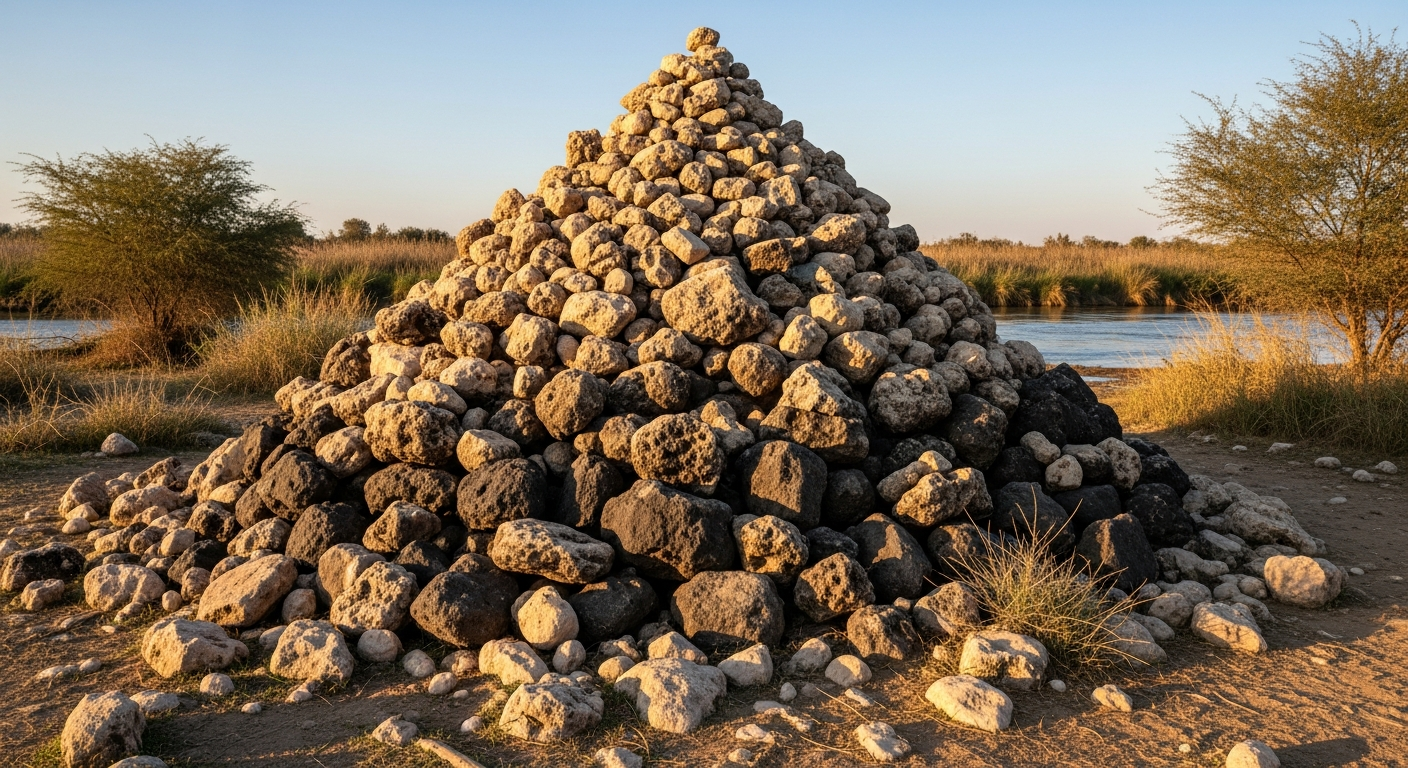
Twelve stones. One per tribe. Stacked as a memorial.
And then this, in verses 6 and 7:
"When your children ask in time to come, 'What do these stones mean to you?' then you shall tell them that the waters of the Jordan were cut off before the ark of the covenant of the Lord… So these stones shall be to the people of Israel a memorial for ever."
The stones were not for their generation. The stones were for the next generation. For their children who had not been there. Memorials look backwards and forwards at the same time. They anchor the past for the sake of the future.
This is what recording prophecy does. It stacks stones for your future self — and for your children, literal or spiritual.
What to record
When you receive something from God — a word, a Scripture, a conviction, a prophecy another believer speaks over you — capture at least these things:
- The word itself. As close to verbatim as possible. If someone is prophesying over you, record it on your phone. Ask permission. Most people will say yes.
- The date. You will need it later when you're wondering how long ago.
- Where you were and what was happening. Context matters. "At the retreat, during the prayer time after Sunday."
- Who spoke it, if it wasn't you. Names matter. Say them with honour.
- Any Scripture that came with it. Words from God are often stitched with Scripture. Record the verse references.
- What stood out. Was there one phrase that pierced? Was there an image? Write it down while it's still warm.
Do this within twenty-four hours. Ideally within one hour. While it is still the voice in your ear, not the memory of a voice.
Where to keep it
A notebook works. An app works. A voice memo works. A shared document works. What matters is that it is in one place, that you can find it again, and that you can come back to it in hard seasons.
You will not come back to it if you have to dig through five notebooks, three journals, two apps and a Dropbox folder. Pick one place. Put everything there.
Doxa was built for this — to capture the word with the voice, the date, the Scripture, and the context, and to hand it back to you years later in the exact season you need to hear it again. It is one of several good options. What matters is that you pick one.
The discipline of returning
Recording is only half the discipline. The other half is returning.
Dust off the journals. Open them on a hard day. Read the words God has spoken to you over the years. Not to nostalgize. To re-enter. To remember what He said. To hand the past to the present, and through the present to the future.
This is what Paul tells Timothy to do in 1 Timothy 1:18 — by the prophecies previously made about you. Timothy is told to wage warfare with his old words. You cannot wage warfare with a word you cannot remember.
This week's practice
Three things.
- Record one word properly. Take the word you brought to the session. Record it — voice note, notebook, app, whatever you use. Include the date, context, Scripture, and what stood out. Do it in the way you plan to keep doing it.
- Decide your place. Where will you keep words from God from now on? Commit to one place. Tell someone in the group. Accountability helps.
- Read one word back. At least once this week, open your record and re-read one word God has spoken to you. Let it settle again.
Before you come to the session
- Come with one word or prophecy written down — anything significant He has spoken.
- Come with your phone or notebook. We will practice capturing properly in the room.
For Facilitators
The full facilitator edition, with teaching notes, session outlines, and prayer prompts for every week, is available as a downloadable PDF and readable on the web.
Open facilitator editionStart building a culture of remembering.
When your community remembers together, everything gets stronger.
Private groups, shared encouragement, real testimonies. Free to start, in your browser, no card needed.
Free to start. No account needed until you create your church.