I Wrote a 6-Week Course for Christians Who Aren't Sure God Still Speaks
A new free small group course for cessationist hearts, Reformed congregations, and pastors with mixed flocks. We don't argue you out of your tradition. We sit with the question, walk through Scripture, and end with three honourable destinations.

There are believers I love who do not believe God speaks personally today. I wanted to write something that honoured them. So I did.
Today we are publishing a new free 6-week small group course called Does God Still Speak? It is the first course in the small-group curriculum, sitting upstream of the existing course on hearing God's voice. It is for cessationist and conservative-evangelical Christians who love Jesus, honour Scripture, and have been taught (often well, often by people they trust) that the Spirit's gift of personal speech ended with the apostles.
If you are not in that group, this post may still be useful, because most of us know someone who is, and most of us have at some point dismissed them with less care than they deserve.
This is what I tried to write.
The honest reason
I have a friend who is a Reformed Baptist. Sharp. Pastoral. Reads everything. Loves Jesus more obviously than most charismatics I know. He is not anti-Spirit. He prays. He preaches. He believes in conviction, illumination, the inner witness of Romans 8. But if you put a microphone in front of him and asked "does God still speak today," he would, very carefully, say no.
For years I assumed that meant he and I were in different rooms. He had his theology, I had mine. We could be friends without ever talking about it.
That was lazy. And, I came to think, dishonouring.
Because he is not refusing to listen. He has read more on this question than most people I know. He has watched what passes for "prophecy" on Christian television and rightly turned away. He has seen pastors abuse their congregations with "the Lord told me." He has read Warfield. He has read MacArthur. He has decided.
If I think the Reformed continuationist position is actually closer to where Scripture sits, then I owe him more than a shrug. I owe him a careful sit-down with the texts, with the tradition, with the wounds, and with the question.
So I wrote a course. Six weeks. Not to convert him. To sit with him.
What it is and is not
Let me say what Does God Still Speak? is not, before I say what it is.
It is not a campaign. It does not end with everyone agreeing. It does not assume a charismatic experience. It does not flatter a tradition before dismissing it. It does not require anyone in the room to change their mind.
It is six weeks of careful walking. The first week names the question and gives every conviction in the room permission to be there. The second walks the Old Testament's pattern of God's speech, from Genesis 1 through the low whisper of 1 Kings 19 to the staggering breadth of Joel 2:28 ("all flesh"). The third walks Pentecost and after, looking honestly at what the New Testament writers actually expected of the believers they were writing to. "Earnestly desire spiritual gifts, especially that you may prophesy" (1 Cor 14:1) is not a sentence Paul wrote casually.
The fourth week is the most important. It is the week we sit with cessationism and honour what it gets right. Calvin against the enthusiasts. Edwards on discernment. Warfield's Counterfeit Miracles. MacArthur's pastoral suspicion of charlatans. We do not move past it lightly. The pastoral wisdom of cessationism (defending the closed canon, refusing manipulation, protecting vulnerable believers, centring Christ) is the fence we want around any conversation about God speaking today, and we say so plainly.
The fifth week makes one careful distinction: revelation and illumination. Revelation closed with the canon. Illumination, the Spirit's ongoing application of the Word to particular hearts, has been confessed by the Reformed tradition for centuries. Calvin's internal testimony. Edwards's Personal Narrative. Spurgeon's personal preaching. John Owen on communion with God. These are not charismatic innovations. They are the historic Reformed faith. And modern Reformed continuationists like Wayne Grudem, Sam Storms, D. A. Carson, and Jack Deere have been carefully threading the needle in our generation.
The sixth week is the close. We walk through the testing framework in full, name the risks both ways, and affirm three honourable destinations: settled cessationism, openness to the next course, or the freedom to remain undecided. Every one of them is honoured. No one is pushed.
The pastor I imagined
Through every line of the course I had a particular reader in mind. A pastor of a mixed-conviction congregation. Cessationist elders on one side. A few people in the church who would describe themselves as "open but not charismatic." A handful of new converts who were not sure what to think. A couple of older saints with quiet stories of God's voice they had never told publicly because the culture of the church did not have room for them.
Most pastors I know in that position are tired. They do not want to start a fight. They also do not want to keep pretending the conversation is settled when half their congregation thinks one thing and half thinks another.
I wanted to give that pastor a tool. A six-week sequence they could hand to a small group with confidence. They could honour their cessationist elder by telling them: the most important week of this course is week four, and it is the week we honour your tradition. They could honour their open-handed members by telling them: we are walking honestly through Scripture, and we are not pretending the texts say less than they do. And they could trust that whoever takes the course will land in one of three places, all of which the pastor can bless.
If you are that pastor, this course was written for you.
The voices the course leans on
You will hear me say this in the course itself, but it is worth saying again. The case for yes, God still speaks today, in some form can be made almost entirely from voices the cessationist already trusts.
Wayne Grudem's The Gift of Prophecy in the New Testament and Today. Sam Storms's Practicing the Power. D. A. Carson's Showing the Spirit. Jack Deere's Surprised by the Voice of God (Deere himself was a Dallas Theological Seminary professor and committed cessationist who, through careful study of Scripture, changed his mind). Behind them, the historic Reformed tradition's confession of the internal testimony of the Spirit, the Spirit's illumination, and the believer's communion with God.
If you finish the course and want to keep reading, those are the books to find.
What we promise
We promise honesty. We promise pace. We promise rigour about Scripture. We promise honour for the cessationist tradition that has guarded the door of the church so faithfully. We promise that no one will be pressured to a particular conclusion. We promise that three honourable destinations will be blessed at the close.
We do not promise that this will be easy. The question this course asks is not a small one. It shapes how we pray, how we suffer, how we read our own lives, how we read each other. Six weeks is a small offering for a question this large. But it is a careful one.
How to get started
The course is free. It lives at doxa.app/courses/does-god-still-speak. All six weeks are there to read. The facilitator notes (with teaching outlines, discussion prompts, common objections, pastoral cautions) are also free, and downloadable as a PDF for facilitators who want to print and walk into a room with a copy.
If you are a pastor, take a look at week four first. That is the week your cessationist members will most need to feel heard. If week four reads honourably to you, the rest of the course will probably work for your group.
If you are a small group leader, start at week one and walk it through.
If you are an individual believer, you can read it on your own. The course is built for groups, but the readings stand on their own.
A final word
Last week I sent a draft to a friend whose theology is more cautious than mine. He read it and wrote back: "I appreciated being heard. Even where I disagree, I do not feel argued at."
That was the only thing I was trying to do.
The Shepherd we both follow is wise enough to keep speaking through Scripture preached and read, through the inner witness of the Spirit, through the love of the saints, through the small mercies of an ordinary Tuesday. Whether He also speaks in the smaller, quieter ways some of us call hearing Him is a question we can hold honestly together. With our Bibles open. With our defences down.
Today, if you hear his voice, do not harden your hearts. (Hebrews 3:7-8)
Whatever you do with the course, may that posture stay in your chest.
Frequently Asked Questions
Who is this course designed for?
Does God Still Speak? is written primarily for cessationist and conservative-evangelical Christians, and for pastors leading congregations with mixed convictions on this question. It does not assume a charismatic experience, and it does not require anyone to change their mind by the end. Week four is entirely devoted to honouring the pastoral wisdom of the cessationist tradition, so sceptical members can engage without feeling argued at.
What is the difference between revelation and illumination?
Revelation refers to the once-for-all deposit of Scripture: God's spoken and written Word given through the prophets and apostles, now closed with the biblical canon. Illumination is the Holy Spirit's ongoing work of applying that Word to individual hearts and circumstances. The Reformed tradition has confessed illumination for centuries (Calvin, Edwards, Owen, Spurgeon), and this distinction is the hinge on which week five of the course turns. Many cessationists already affirm illumination; the course asks whether the divide is smaller than it appears.
Does the course end with a conclusion about whether God still speaks?
No. The course closes with three honourable destinations: settled cessationism, openness to further study, or the freedom to remain undecided. All three are affirmed. The goal is a careful, honest walk through Scripture and tradition, not a verdict. The facilitator notes include guidance for pastors on blessing whichever position members land in.
What books does the course draw on?
The course leans heavily on voices the cessationist tradition already trusts: Wayne Grudem's The Gift of Prophecy in the New Testament and Today, D. A. Carson's Showing the Spirit, Jack Deere's Surprised by the Voice of God (Deere was himself a committed cessationist Dallas Seminary professor before his position changed), and the historic Reformed confessions of the Spirit's internal testimony and illumination. Reading those books after the course is the natural next step for anyone who wants to go deeper.
Download Doxa, the app for recording, weighing and remembering prophetic encouragement.


Continue this pillar
Hear & Recognise


Next in the practice
Prophesy
Stewarding the words God gives you for others, and yourself.
Try Doxa free
Three free interactions in your browser. No signup required to start.Free on iOS and Android.
Try Doxa FreeOr get the app for unlimited interactions and live voice.
Keep reading

My Sheep Know My Voice: Hearing God and Testing Every Whisper
How to recognise God's voice the way a child knows their mother's, and why every impression must be tested against the person of Jesus.

Timothy's Prophecies: Weapons Paul Told Him to Fight
Paul told Timothy to wage the good warfare using his prophecies. Not theology. Not strategy. The personal words God had spoken over his life. Here is why.
From the Grace Record
Real accounts of what God has done, drawn from 2,000 years of believers.
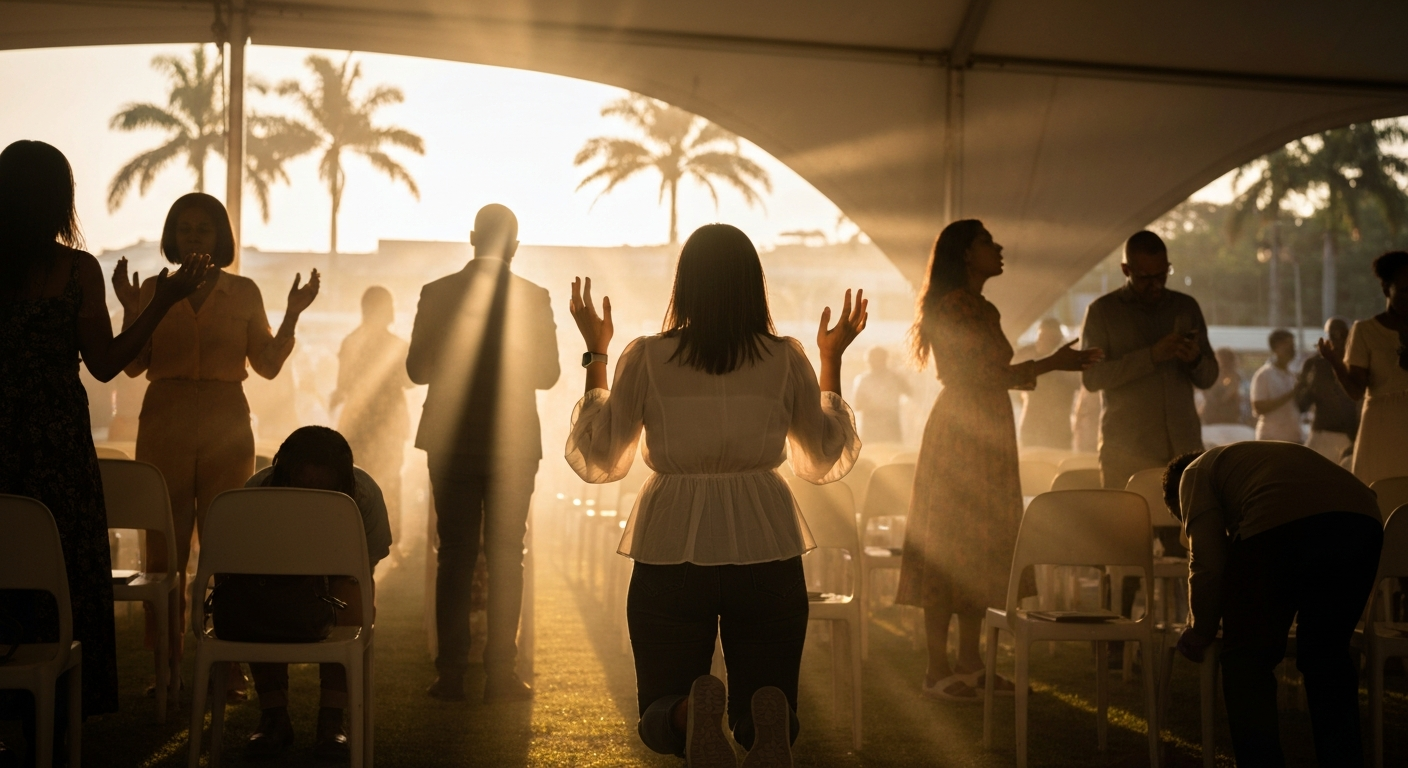 Durban, KwaZulu-Natal
 Miracle of Healing in South Africa
During a 2025 South Africa crusade, Precious was miraculously healed from diabetes through prayer, along with a woman healed from kidney infection.
Read the story Samaria / Rome
 Justin Martyr: Philosopher Found True Wisdom
A Greek philosopher in 2nd century Rome searched through Stoicism, Platonism, and other philosophies before encountering Christianity.
Read the story Iran
Iran Inside Iran's Underground Church
Iran's underground church is one of the fastest-growing in the world, the Holy Spirit is reaching Muslims through dreams, healings, and secret house churches despite severe persecution.
Read the story