The Voice That Still Speaks
Hearing God is a lifelong practice. This week, we sharpen our listening.
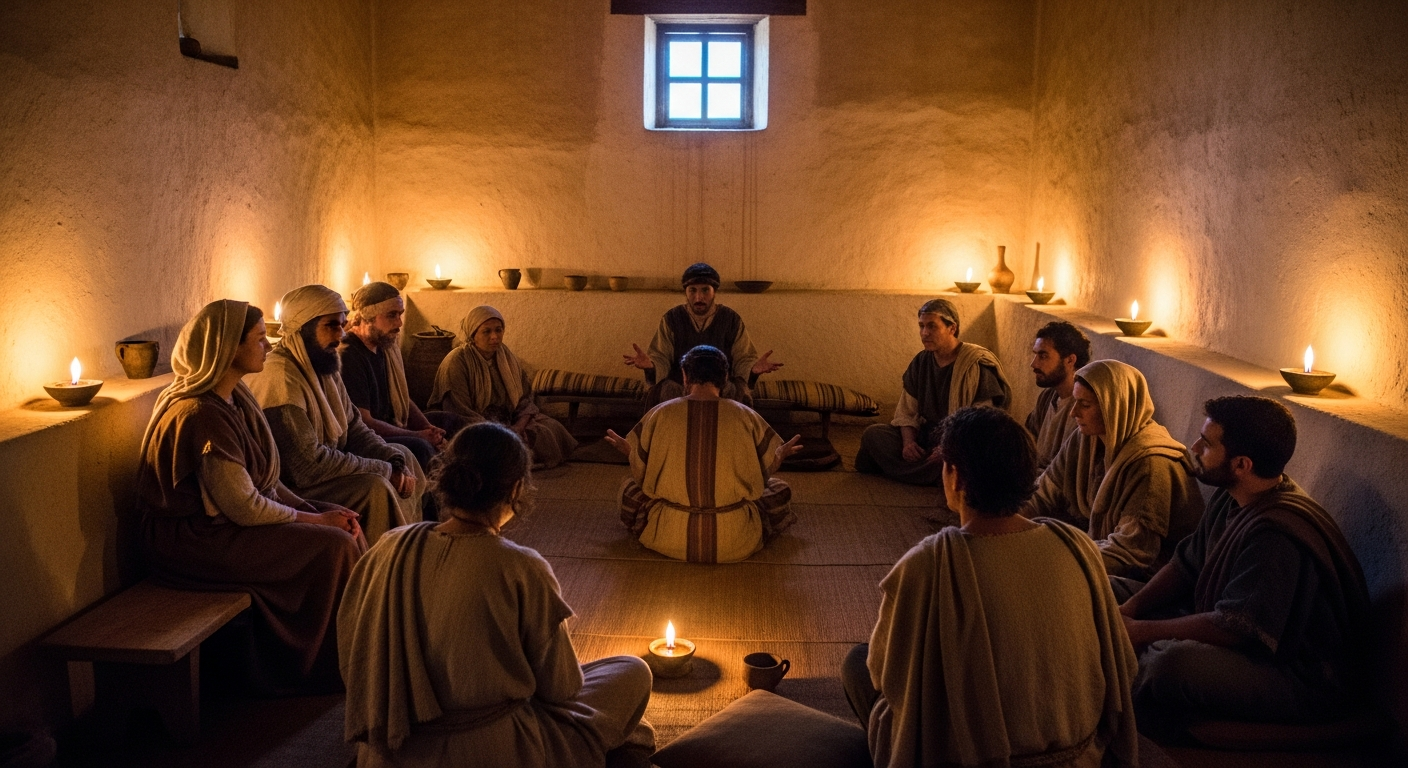
Before the session
Read this through at least once. Bring one honest reflection to the group.
The voice that still speaks
The Bible opens with a voice. Let there be light. It does not open with a feeling, or a principle, or a plan. It opens with a voice — a voice that still speaks light into dark places.
That voice has spoken through every generation since. Through the prophets. Through His Son. Through His Spirit in His people today. Every believer, in every season, is invited into the same ongoing conversation.
This week is about sharpening that conversation. Not starting it — we are all already in it. Growing in clarity. Learning, as a lifelong discipline, to recognise God's voice more quickly, respond to it more faithfully, and carry what He says more carefully.
The craft of listening is always maturing. Elijah the prophet needed the low whisper. Samuel the boy needed Eli the priest to recognise what he could not yet name. Even the apostles kept growing in it. We are all in that same lineage — learning the shape of His voice over the length of a life.
What Scripture says about ongoing hearing
Jesus said, my sheep hear my voice (John 10:27). Present tense. Ongoing. A living description of the normal life of those who belong to Him.
Paul wrote to the Corinthian church, follow the way of love, and eagerly desire spiritual gifts, especially that you may prophesy (1 Corinthians 14:1). The imperative stands for every generation — eagerly desire, grow in it, practice it.
And the writer of Hebrews, speaking of the supremacy of Christ, said, long ago, God spoke to our fathers by the prophets — but in these last days He has spoken to us by His Son (Hebrews 1:1-2). The point is not that the speaking has stopped. The point is that it has reached its fullest, truest form in Christ, and continues through His Spirit today.
God is not quieter now. He is closer.
Three places we can sharpen
In any discipline of the Christian life — prayer, fasting, Scripture reading, generosity — there are always places to grow. Listening is no different. Here are three places a small group can sharpen together:
1. Expectancy. Over time, a listening believer learns that God speaks more often than they first realised. Thoughts that seemed like coincidence were, on closer reflection, God. Scriptures that came alive were God. Phrases another believer spoke that stayed with us were God. Paying attention changes what we notice.
2. Discernment. Every honest listener learns that impressions come from several places — from us, from the Spirit, from the enemy, from our tradition, from our tiredness. Telling them apart is a craft, and Scripture gives us tools. We will spend week three on these.
3. Stillness. God rarely shouts over a crowded room. Elijah found Him not in the earthquake, not in the fire, but in the low whisper (1 Kings 19:12). Growing in hearing usually includes growing in stillness — in regular, unhurried time where a voice can be received.
These three — expectancy, discernment, stillness — are the quiet work of a maturing life of hearing.
The Samuel moment
1 Samuel 3 is a beautiful little story, and worth sitting with.
Samuel, still a boy, is sleeping in the temple. God calls his name. Samuel thinks it's his mentor Eli. This happens three times before Eli, who knows this pattern from his own lifetime with God, finally tells the boy: "Go, lie down, and if He calls you, you shall say, 'Speak, Lord, for your servant hears.'"
Two things are worth noticing.
First, the text opens with: the word of the Lord was rare in those days; there was no frequent vision. It was a quieter season in Israel. And in the middle of it, God calls a boy. Quieter seasons are never God's silence. They are often the places He begins new things.
Second, Eli is the one who teaches Samuel how to respond. Eli himself was not perfect. But his long history with God gave him the ear to recognise what was happening in the next generation and to point the way. The Lord uses those who have been listening for years to help form those who are still learning.
Samuel's answer becomes the posture of every listener: Speak, Lord, your servant hears.
Not fix me. Not prove yourself. Not impress me. Just speak — I am listening.
What hearing God looks like in practice
Hearing God is not reserved for a spiritual elite. It is not a performance. It is not usually dramatic. It is the ordinary, lifelong experience of a believer turning their attention toward the One who has been speaking to them from the beginning.
Sometimes His voice comes as a thought that is kinder and cleaner than our own. Sometimes as a line of Scripture that suddenly lights up. Sometimes as a picture, a knowing, or a conviction. Sometimes through another believer speaking what they have heard on our behalf.
God speaks in the ways He has always spoken — through Scripture, through His people, through circumstances, and through the inner witness of the Spirit.
What changes over time is not whether He speaks. It is how clearly we hear, how quickly we recognise, and how faithfully we respond.
What this week is for
This course does not aim to convince anyone that God still speaks. Scripture has already done that, and we are all here because we believe it. This course aims to give a small group seven weeks to practice — to listen together, test together, record together, speak together.
Tonight we begin simply. We will sit in silence and listen. We will share what came. And we will start the work of sharpening an ear that God has been training in each of us for years.
Before you come to the session
Bring one honest reflection on each of these:
- Name a moment recently when you sensed God saying something to you. What was it, and what did you do with it?
- Which of the three places — expectancy, discernment, stillness — is the one you most want to grow in?
- Is there a season when your listening has been clearer? What was different about it?
Bring one of those answers to the group.
For Facilitators
The full facilitator edition, with teaching notes, session outlines, and prayer prompts for every week, is available as a downloadable PDF and readable on the web.
Open facilitator editionStart building a culture of remembering.
When your community remembers together, everything gets stronger.
Private groups, shared encouragement, real testimonies. Free to start, in your browser, no card needed.
Free to start. No account needed until you create your church.