The Lost Discipline: The Spiritual Practice the Church Forgot
Remembering what God has said and done isn't a footnote in Scripture. It might be the most important spiritual discipline the modern church has overlooked.

The spiritual practice the church forgot. And why it might be the one we need most.
I was sitting at my desk last Tuesday, scrolling through a Word, now Google Doc I started in 2001. It's a long document. Headers and dates and sources, hundreds of entries, typed up from voice recordings of people praying over me, things God had spoken into my life, moments where something broke through and I knew I had to write it down before it evaporated.
Some of those entries are almost twenty years old now. And here's what gets me: the ones that hit hardest today aren't the fresh ones. They're the old ones. The words spoken over me in a small room in Cape Town in 2006 that I didn't fully understand at the time, but that describe my life right now with uncanny precision. The prayer someone offered in passing at a church weekend away that I nearly forgot to record. The encouragement that felt generic then and feels surgical now.
Encouragements compound. Like interest. Like kilometres on the bike. Like trust in a marriage. They accumulate meaning over time, and the ones you recorded fifteen years ago can be the very thing that keeps you standing when the road gets impossibly steep.
But only if you remember them.
The Gap No One Noticed
I've been thinking a lot about spiritual disciplines lately, which is probably inevitable when you're building an app designed to help people record and recall what God has promised them and what He has done.
And something has been bothering me.
Pick up any of the major books on spiritual disciplines published in the last fifty years and look at the table of contents. Richard Foster's Celebration of Discipline, published in 1978, has sold millions of copies and is widely considered the definitive modern work on the subject. His twelve disciplines are meditation, prayer, fasting, study, simplicity, solitude, submission, service, confession, worship, guidance, and celebration. Dallas Willard's The Spirit of the Disciplines organises his into disciplines of abstinence (solitude, silence, fasting, frugality, chastity, secrecy, sacrifice) and disciplines of engagement (study, worship, celebration, service, prayer, fellowship, confession, submission). Donald Whitney's Spiritual Disciplines for the Christian Life, which has sold over 600,000 copies, covers Bible intake, prayer, worship, evangelism, serving, stewardship, fasting, silence and solitude, journaling, and learning. John Mark Comer's Practicing the Way, a recent New York Times bestseller, centres on Sabbath, Scripture, prayer, community, simplicity, generosity, and what he calls "the practices of Jesus."
These are excellent books. I've read most of them. I've benefited from them deeply.
But not one of them includes remembering.
Not one of them treats the deliberate, intentional practice of recording and recalling what God has promised and what God has done as a standalone spiritual discipline. Some touch on it obliquely, usually under "journaling" or "meditation" or "gratitude." But the discipline itself? The act of stacking stones? Of building a personal record of God's faithfulness? Of going back to what was spoken, what was seen, what was experienced, and letting it fuel you for the next climb?
It's not there.
And that strikes me as a glaring omission, because when you open the Bible, remembering isn't a footnote. It's everywhere. It might be the most commanded spiritual act in all of Scripture.
In fact, you could argue that Scripture itself exists because of remembering. Would we know what God has said and done if it hadn't been faithfully recorded? The Bible is, in a very real sense, the ultimate record of God's faithfulness, the greatest remembering document ever assembled. And every time we practise communion, we are remembering Jesus. He told us to. It's built into the architecture of the faith.
What Scripture Actually Says About Remembering
Consider the evidence.
When the Israelites crossed the Jordan into the Promised Land, God didn't say, "Great job, carry on." He told Joshua to appoint twelve men, one from each tribe, to haul twelve stones out of the middle of the riverbed and stack them on the bank. Why? So that when their children asked, "What do these stones mean?" they could say, "This is where God stopped the river and brought us through on dry ground." Those stones were physical, tangible, heavy reminders of something God had done that was too important to leave to memory alone. (Joshua 4:1–7)
When Samuel defeated the Philistines at Mizpah, he took a stone and set it up between Mizpah and Shen and named it Ebenezer, "the stone of help," saying, "Thus far the Lord has helped us." That stone wasn't decorative. It was a stake in the ground. A line drawn in the sand of history that said: up to this point, God has been faithful. Don't forget it. (1 Samuel 7:12)

When Jesus sat with His disciples at that last meal, He took bread, broke it, and said, "Do this in remembrance of me." Every time the church gathers around the communion table, we are practising a discipline of remembering. But how often do we recognise it as such? (Luke 22:19)
The Psalms are saturated with the command to remember. Psalm 77 records Asaph in crisis, his faith nearly collapsed, until he says, "I will remember the Lord's works; yes, I will remember your ancient wonders." And from that moment, the psalm pivots from despair to worship. The act of remembering changed everything.
Psalm 78 is even more direct. Asaph writes that the stories of God's faithfulness must be passed to the next generation "so that they should set their hope in God and not forget the works of God." The purpose of remembering is survival.
Moses, in Deuteronomy 8, warned the people that when they entered the land of milk and honey, built beautiful houses, and watched their flocks multiply, their hearts would become proud and they would forget the God who brought them out of slavery. Prosperity, Moses understood, is the enemy of memory. When things are going well, we forget how we got here.
And then there's Paul. Writing to young Timothy, he says something remarkable: "I am giving you these instructions, Timothy, my child, in accordance with the prophecies made earlier about you, so that by following them you may fight the good fight." Paul told Timothy to remember the prophetic words spoken over him, to recall them, to use them as weapons in the fight. And the cost of not remembering? Paul gives us two names: Hymenaeus and Alexander, who "suffered shipwreck in the faith." The consequence of forgetting what God has spoken isn't neutral. It's catastrophic. (1 Timothy 1:18–20)
Why the Church Stopped Practising It
So here we are. The Bible treats remembering as a command, a weapon, a safeguard against pride, a fuel for endurance, a bridge between generations, and a practice woven into the very structure of worship. And yet the books we read, the conferences we attend, the formation programmes we follow somehow don't list it alongside prayer and fasting and study and silence.
How did this happen?
I think part of the answer is that we've conflated remembering with something more passive. We think of it as something that happens to us rather than something we do. A memory floats up unbidden, and we're grateful for it. But that's not what the Bible describes. Biblical remembering is active. It's deliberate. It involves physical acts: stacking stones, breaking bread, writing words on doorposts, binding laws around your neck. The Hebrew word for "remember" often carries the sense of acting on what is remembered, of letting the memory produce a response. It is fuel.
A few voices have begun to notice the gap. Dr Ken Boa, author of over fifty books and the formation text Conformed to His Image, has explicitly argued that gratitude and remembering should be treated as spiritual disciplines, calling our tendency to forget "a mark of our fallenness." He writes that if we leave gratitude to spontaneous moments, it will gradually erode, and we will forget all that God has done for us. A writer at the CRC Network described remembering as "a faith practice, or spiritual discipline, just like prayer or hospitality. It's a muscle we need to exercise." Kent Bass, writing for Acts 29, put it bluntly: "To be a Christian is to practice the discipline of remembrance."
But these are voices at the margins. The major works, the ones sitting on millions of bookshelves, the ones that seminary students read and pastors recommend, haven't caught up yet. Remembering remains the discipline that everyone assumes someone else is teaching.
A Personal Record of Faithfulness
Here is why I think this matters so much, personally.
Since about 2000, I have been recording what God has said to me and what He has done in my life. In the early days, it was Word documents. Then Google Docs. When smartphones arrived with voice recorders, I'd record people praying over me and then transcribe it later, sometimes at midnight, typing out phrases I didn't fully understand yet but knew I needed to preserve. I've tested these words, weighed them, held them up to Scripture, gone back to them months and years later to see whether they were real.
They were. Over and over again, they were.
And that record, that personal archive of God's faithfulness, has been the single most important thing in my spiritual life. Not because I'm particularly disciplined. I'm really not. But because in the moments where the road gets steep, where the climb feels endless, where every reasonable voice in my head says, "Why are you doing this?" I can open that document and see, in my own handwriting, evidence that God has spoken, that He has moved, that He has kept His word.

Every cyclist knows this moment. You're two hours into a ride, deep into a climb that seemed manageable at the bottom but has now become something else entirely. Your legs are burning, your breathing is ragged, and you're alone. The temptation isn't to stop. The temptation is to believe that the effort is pointless, that you'll never reach the top, that you should never have started.
And the thing that keeps you turning the pedals? Remembering the last time you felt like this and made it. Remembering that the summit exists. Remembering that you have done hard things before.
Faith works exactly the same way. And just like an athlete needs a training log, a believer needs a record.
Why I Built Doxa
That's why I built Doxa.
Not because the world needed another app. But because I believe that remembering what God has said and what He has done is a spiritual discipline, maybe the spiritual discipline, and that in a world of infinite distraction, we need practical tools to help us practise it.
Doxa's Encouragement Vault is where you store the words that matter, the prophecies, the testimonies, the prayer notes, the moments where God's Presence was so real you could barely move. Keep them private or share them with those closest to you. The Grace Record is the growing archive of what God has been doing across the world, in all walks of life, for centuries, because your story joins a much bigger one. The full Bible is there too, because every act of remembering is weighed against Scripture. And Doxa Engage draws from your Encouragement Vault, the Grace Record, and the Bible to surface the right encouragement at the right moment, so you can experience God's glory and His Presence again and again for the whole journey.
It's the Ebenezer stone for the smartphone age. Not a replacement for the ancient practice, but a vehicle for it.
Start Recording Today
I think the church is ready for this conversation. I think there are millions of people who know intuitively that they need to remember, but nobody has told them it's a discipline, that it takes intentional effort, that it requires a practice and a place and a habit as deliberate as prayer or fasting.
And I think the cost of not having this conversation is exactly what Paul warned Timothy about. Shipwreck. Not because we stopped believing, but because we stopped remembering why we believed.
So here's my invitation. Simple as it gets.
Start recording. Today. One entry. One thing God has said, done, promised, or shown you. Write it down. Save it in the Doxa app, where finding it again is the whole point. And then go back to it in six months and see if it doesn't hit differently.
Because encouragements compound. And the word spoken over you ten years ago might be the very thing that saves your faith tomorrow.
Don't forget what God said.
Frequently Asked Questions
What is the spiritual discipline of remembering?
It is the deliberate practice of recording and returning to what God has said and done, so His faithfulness stays in front of you instead of fading. Scripture treats it as central: Israel built stone memorials, kept feasts, and was told again and again to "remember" (Deuteronomy 8:2, BSB), yet most modern discipline lists leave it out. It is less about adding a new habit and more about refusing to forget the things that already shaped your faith.
Why does the church rarely teach remembering as a discipline?
Partly because it leaves no obvious output; unlike prayer, fasting, or giving, remembering produces nothing you can measure on a Sunday. And partly because we assume memory is automatic when it is not; the feeling of a moment fades within days. The result is a generation that has genuinely experienced God but kept no record of it, and so has little to return to when faith gets hard.
How do I start practising it?
Begin with one entry: write down a single thing God has said, done, promised, or shown you, and date it. Keep it in the Doxa app, which holds it dated and searchable, and return to it in a few months to see how it reads. The practice compounds; a word recorded in a clear season often becomes the very thing that steadies you in a dark one.
Is keeping a record of God's faithfulness biblical?
Yes. From the stones at Gilgal (Joshua 4) to the Psalms rehearsing God's deeds to Paul telling Timothy to fight the good fight by holding onto "the previous prophecies about you" (1 Timothy 1:18, BSB), Scripture consistently treats remembering as something you do on purpose. The Bible itself exists because people recorded what God said and did rather than trusting memory alone.
Is there an app that remembers what God said to you?
Doxa is the app built specifically to remember what God said to you. You record words spoken over you, prophecies, answered prayers, and moments of His presence, by voice or text, into a private Encouragement Vault. Years later, when you need what God said in an earlier season, you search the Encouragement Vault or ask Doxa Engage, and it surfaces the exact entry relevant to where you are now. Doxa also draws on the full Bible and The Grace Record, 1,600+ real testimonies from believers across history, so what God said to others in similar seasons is part of the recall too. It is the Ebenezer stone for the smartphone age. Free to start on iOS and Android.
Keep Reading
- Remembering God's Faithfulness: Why Looking Back Moves You Forward
- How to Record Your Testimony: A Practical Guide
- Never Put Out the Fire: How to Keep Your Hope Alive
- Arise: A Call to Spiritual Courage When God Moves
We have built the Doxa app to equip people to better record and remember God's encouragement, both what He has already done, and what He has promised. The Encouragement Vault, the Grace Record, the full Bible, and Doxa Engage work together to help you experience His glory and Presence again and again for the whole journey. Download Doxa.
Download Doxa, the app for recording, weighing and remembering prophetic encouragement.


Read next


From the Grace Record
Real accounts of what God has done, drawn from 2,000 years of believers.
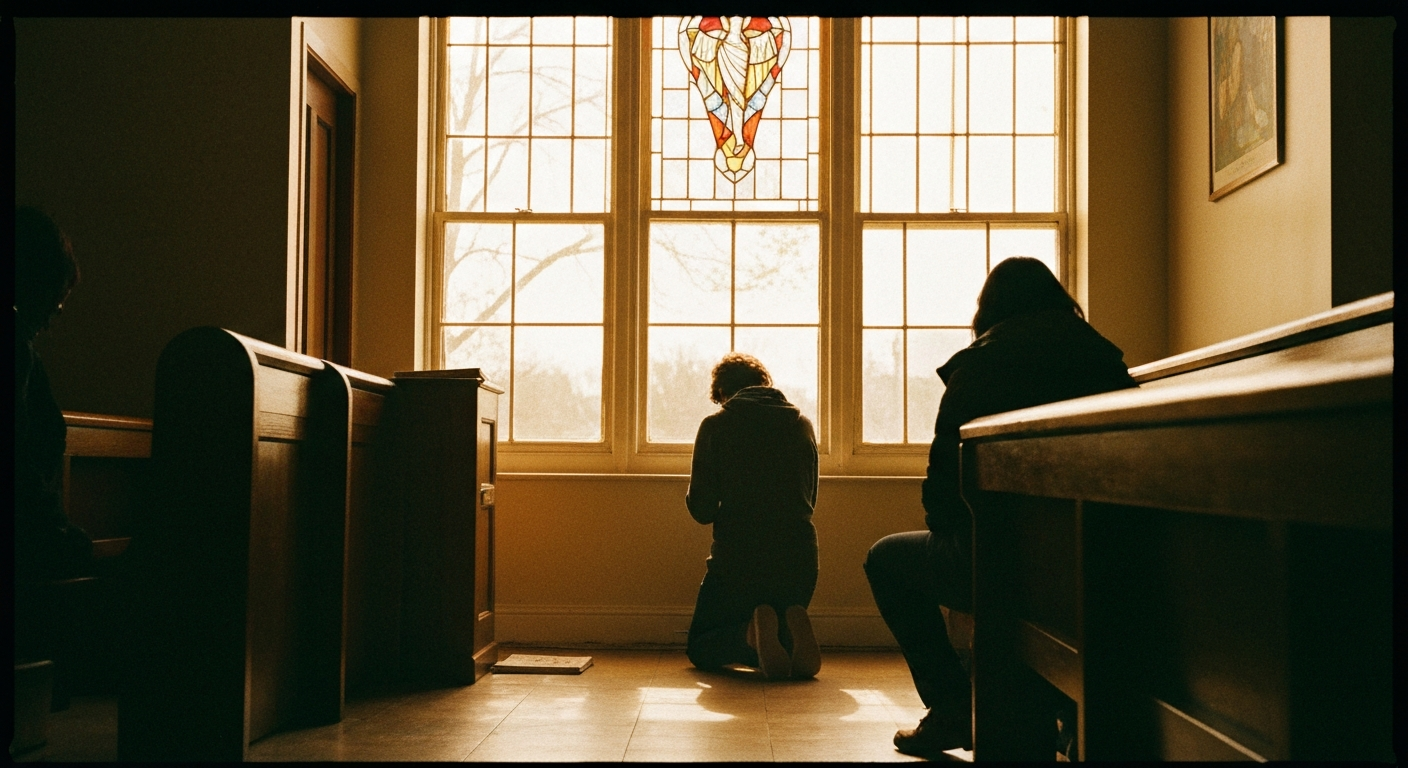 Iran
Iran Inside Iran's Underground Church
Iran's underground church is one of the fastest-growing in the world, the Holy Spirit is reaching Muslims through dreams, healings, and secret house churches despite severe persecution.
Read the story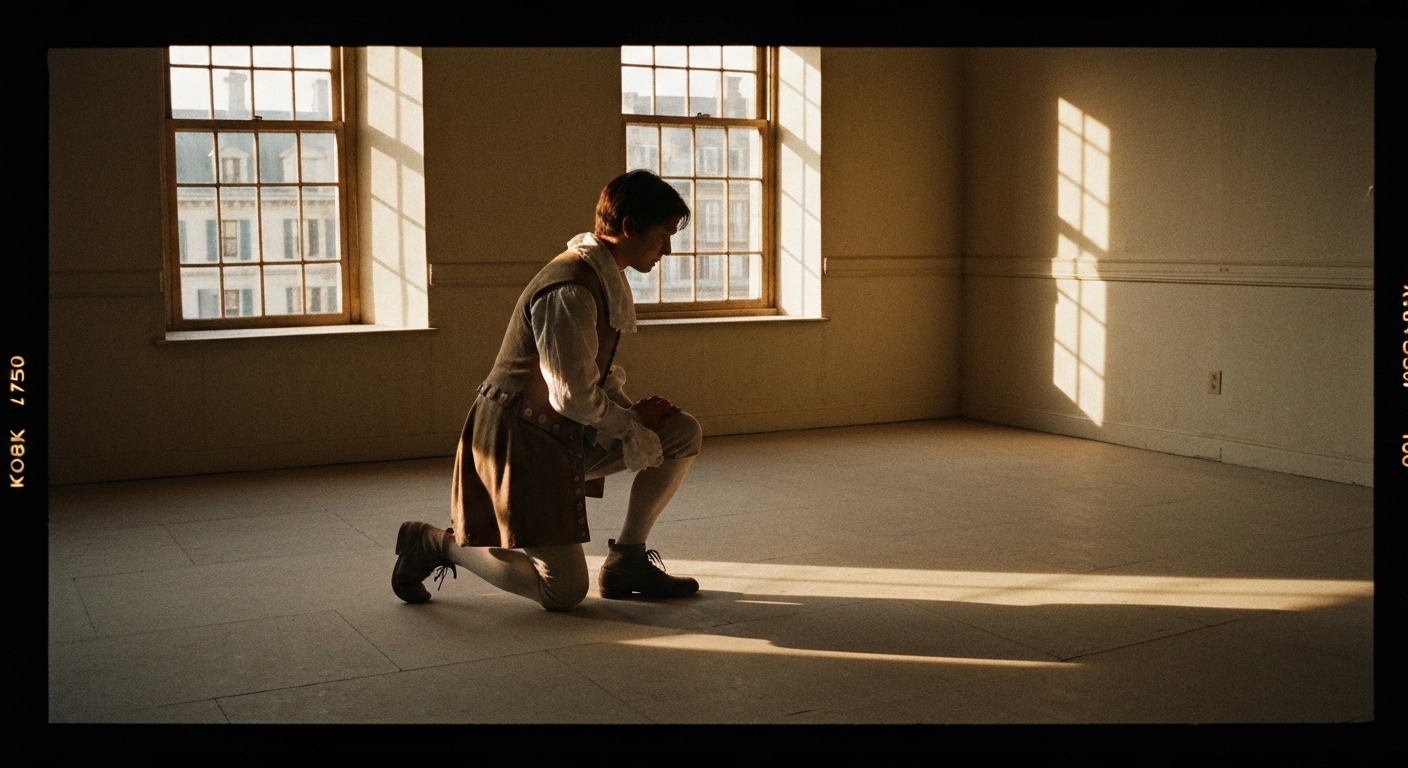 Leipzig, Saxony
 Johann Sebastian Bach - Every Note for God's Glory
Johann Sebastian Bach dedicated his entire musical genius to God's glory, writing 'Soli Deo Gloria' on his compositions and serving as a church musician.
Read the story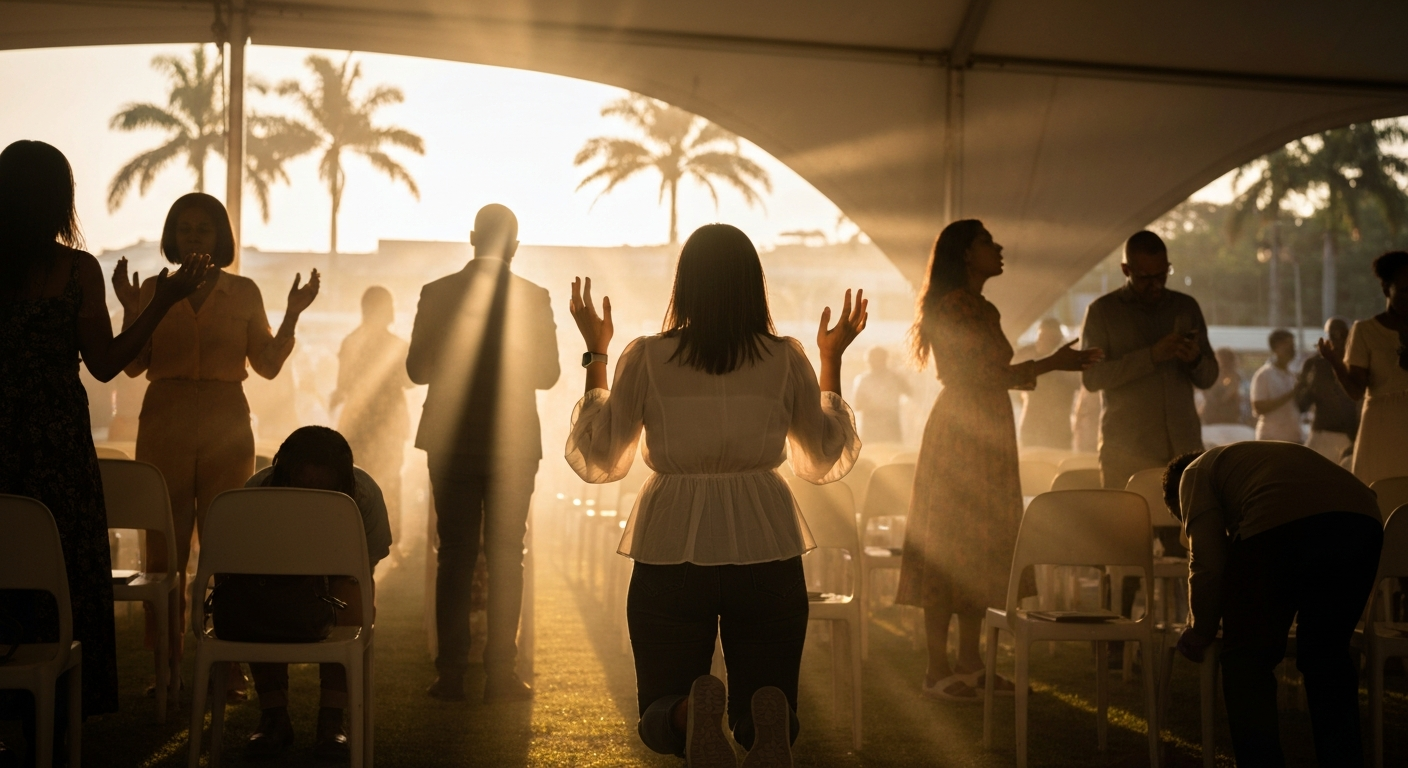 Durban, KwaZulu-Natal
 Miracle of Healing in South Africa
During a 2025 South Africa crusade, Precious was miraculously healed from diabetes through prayer, along with a woman healed from kidney infection.
Read the story