How to Record Your Testimony Before It Fades
Your testimony is fading. The details you remember today won't be as sharp next year. Here's exactly how to record it, and why it matters more than you think.
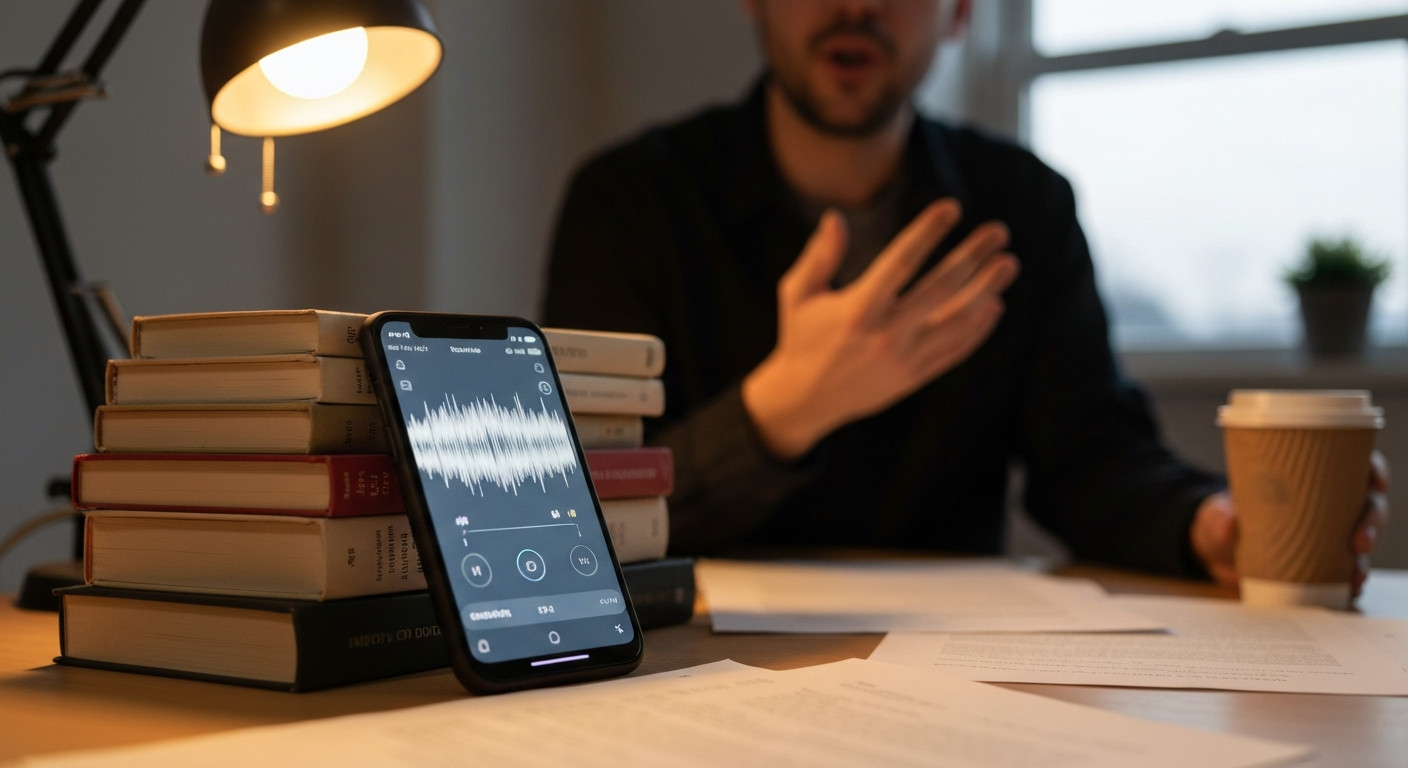
You remember the moment. God showed up. Something shifted. You felt it in your chest, heard it in someone's words, read it in a verse that cut straight through the noise. It was real. It mattered. And right now, you can still recall the details. But in six months? In five years? The edges will blur. The specifics will dissolve into a vague sense that "something happened once." This guide is about making sure that does not happen.
Scripture commands God's people to remember. Not because God forgets, but because we do. And when we forget what God said to us, we lose access to encouragement that was meant to carry us through seasons we have not reached yet.
A testimony recorded today can encourage you more in ten years than it did the day it happened. But only if you capture it before the details fade.
Why Testimonies Fade (and Faster Than You Think)
Memory is not a filing cabinet. It is more like a sandcastle. The broad shape holds for a while, but the fine details erode quickly.
Research on autobiographical memory shows that the sharpest details of a meaningful experience begin to blur within weeks. After a few months, you retain the emotional impression ("it was powerful") but lose the specifics: what was said, what you felt, which verse it was, who was in the room.
This matters because the specifics are where the power lives. "God encouraged me once" is easy to dismiss when life gets hard. But "on 14 March 2024, during a prayer meeting, someone I had never met said God wanted me to know I was not forgotten, and I felt something break open in my chest" is a different thing entirely. That level of detail anchors the memory. It makes it usable.
The Bible takes this seriously. Moses told Israel: "Remember how the LORD your God led you all the way in the wilderness these forty years" (Deuteronomy 8:2, NASB). Not "remember vaguely." Remember how. The route, the provision, the testing. Detail by detail.
If Israel needed to be told to remember, so do we. And the first step is recording.
What to Record: The Five Things That Matter Most
You do not need to write a book. You need to capture five things while they are still fresh.
1. The moment itself. What happened? Be specific. Was it a conversation, a prayer time, a service, a quiet moment reading Scripture? Name the setting. Name the date if you can.
2. What God said or did. This is the centre of the testimony. Was it a verse that pierced you? Words someone spoke that felt like they came from beyond that person? A situation that resolved in a way only God could have orchestrated? Write down the actual words if you remember them.
3. What you felt. Not just "it was good." Did you feel relief? Peace after months of anxiety? A weight lifting? Tears you were not expecting? Your emotional response is part of the testimony; it is evidence that something real happened.
4. The context. What was happening in your life at that moment? Were you in a difficult season? Facing a decision? Doubting? The context makes the testimony meaningful when you revisit it later. It shows you exactly what God was responding to.
5. What it meant to you. One or two sentences on why this moment mattered. What did it confirm, heal, or shift? This interpretive layer helps future-you understand why past-you considered this worth recording.
Five elements. You can capture all of them in a few minutes if you do it while the memory is fresh.
How to Record It: Three Practical Methods
The best method is the one you will actually use. Here are three options, from simplest to most purposeful.
Voice memo. Open your phone. Hit record. Talk for two to three minutes. Do not script it. Just tell the story the way you would tell a friend. Voice captures emotion and nuance that written words often miss. State the date, the context, and what happened. Then describe how it felt. The unfiltered version is the one you will want to hear again in five years.
Written journal. If you already keep a journal, add a dedicated section for testimonies. Date each entry. Use the five elements above as a simple framework. Include the "before," not just the breakthrough; the contrast is where the testimony comes alive. Even a few sentences are better than nothing. If your journals are gathering dust, take this as your nudge to dust them off. The encouragement you need today might already be written in your own handwriting.
The Doxan Encouragement Vault. This is what it was built for. The Doxan Encouragement Vault lets you record your testimonies by text or voice: the moments God showed up, the words you received, the verses that carried you. You can keep them private, share them with close friends, or submit them to The Grace Record. Because your records sit alongside Scripture and the 1,600+ stories already in The Grace Record, Doxa Engage can draw from all three sources when you need encouragement later. Your testimony does not just sit in storage; it becomes part of a living library of God's faithfulness that grows more useful over time. See how it works.
Whichever method you choose, the rule is the same: record it within 48 hours. The longer you wait, the more you lose.
When to Revisit: The Seasons That Need Your Testimony Most
Recording is only half the equation. The other half is going back to what you recorded when you need it most.
The psalmist wrote: "I shall remember the deeds of the LORD; surely I will remember Your wonders of old. I will meditate on all Your work and muse on Your deeds" (Psalm 77:11-12, NASB). Notice the context of that psalm. It is not a celebration hymn. It is a lament. The psalmist is struggling, and his strategy for surviving the darkness is to remember what God has already done.
This is the founding vision behind Doxa: God's encouragement is for the whole road, not just the moment you first receive it. A testimony recorded five or ten years ago can encourage you more deeply than it did the day it happened, because now you have the full picture. You can see what God was doing. The spiritual discipline of remembering is a survival strategy.
There are four seasons when revisiting your recorded testimonies is especially powerful.
Hard seasons. When life is painful and God feels distant, your own recorded words become encouragement for the hard road. They are proof, in your own voice or handwriting, that God has been faithful before.
Seasons of doubt. Doubt is not the absence of faith; it is faith under pressure. Your recorded testimonies are personal evidence. "I know this happened. I was there. I wrote it down."
Decision points. When you face a crossroads, patterns emerge from your recorded testimonies. You see how God leads, what he tends to confirm, how his timing works. That pattern recognition is invaluable, but it requires a record to draw from.
Ordinary seasons. You do not have to wait for a crisis. Revisit your testimonies monthly. Let them remind you of what is true when nothing dramatic is happening.
Sharing What You Have Recorded
A recorded testimony does not have to stay private. Scripture suggests it should not.
"One generation shall praise Your works to another, and shall declare Your mighty acts" (Psalm 145:4, NASB). In Malachi, God honours a community that speaks about him to one another: "Then those who feared the LORD spoke to one another, and the LORD gave attention and heard it, and a book of remembrance was written before Him" (Malachi 3:16, NASB). A book of remembrance. A record.
Once you have recorded your testimony, you have options.
Share it with a close friend. Send them the voice memo. Read them the journal entry. Let someone else carry the memory with you. If you are not sure how to share naturally, this guide on sharing your testimony covers structure, common mistakes, and how to tell your story without cringe.
Bring it to your small group. Read a short excerpt. Let people ask questions. Testimonies shared in community build collective faith. Your story might be the exact thing someone else needed to hear this week.
Submit it to The Grace Record. The Grace Record is a growing collection of 1,600+ real stories from believers, accounts of God's faithfulness across every kind of season. You can submit your own testimony to add to the record. Your story becomes part of something larger: a living witness that future believers can draw from, just as you draw from those who came before you.
FAQ
Why is recording your testimony important?
Memory erodes faster than most people expect. The emotional impression of a significant moment, "God showed up," can stay for years, but the specific details that make a testimony usable (what was said, which verse, the exact date, what you were facing) blur within weeks. A recorded testimony captures those details while they are sharp, so that future seasons have something concrete to return to rather than a vague sense that something happened once.
What should I include when I record my testimony?
Five things cover most of what matters: the date and setting, what God actually said or did, how you felt in the moment, the context you were carrying at the time, and one or two sentences on what the moment meant to you. You do not need polished prose. The rougher and more specific the entry, the more powerful it tends to be when you revisit it in a hard season.
How soon after the experience should I record my testimony?
Within 48 hours is the practical rule. Research on autobiographical memory shows that specific details, the words someone spoke, the physical sensation, the precise verse, begin to fade within days. A voice memo recorded on the same evening, even two to three minutes of unscripted talking, often preserves more than a journal entry written weeks later after the edges have blurred.
Is there an app designed for recording faith testimonies?
Doxa's Encouragement Vault is built for exactly this purpose. You can record testimonies by text or voice, keep them private or share them with a close friend, or submit them to The Grace Record, a searchable library of 1,600+ verified stories of God's faithfulness. Because your entries sit alongside Scripture inside Doxa, they can be surfaced again when you most need to be reminded of what God has already done.
You will forget. Not because the moment did not matter, but because that is how memory works. Record it now. Your future self will thank you.
Explore The Grace Record · Learn how Doxa works
Keep Reading
Continue this pillar
Record
Christian Testimony Journal: Why Your Story Matters
A testimony journal is more than a diary. It is a record of what God has done. Here is why keeping one changes how you pray, endure, and encourage others.
Prayer Journal Prompts: 30 Questions to Go Deeper with God
30 prayer journal prompts that go deeper than gratitude lists. Organized by what you need: praise, honesty, discernment, identity, and community. Try one today.
How to Journal Your Faith (Even If You Hate Writing)
You do not need to be a writer to journal your faith. Practical methods including voice notes, prompts, and digital tools. Start capturing what God is doing.
Next in the practice
Test
Holding every word against the person of Jesus and the Scriptures that point to Him.
Continue to TestTry Doxa free
Three free interactions in your browser. No signup required to start.Free on iOS and Android.
Try Doxa Free

Or get the app for unlimited interactions and live voice.
Keep reading
How to Create a Church Testimony Submission Form
A ready-to-use church testimony submission form: the fields to include, sample consent wording, and how to store submitted stories safely.
How to Teach Your Congregation to Hear God's Voice
A six-week, church-wide teaching plan for helping a whole congregation learn to hear God's voice safely: weekly Scripture, a practice, a small-group question, and a safeguarding line for training.
From the Grace Record
Real accounts of what God has done, drawn from 2,000 years of believers.
Polycarp of Smyrna
Polycarp of Smyrna, student of Apostle John, remained faithful to Christ for 86 years until his martyrdom in 155 AD, declaring he could never blaspheme.
The Women Who Lead Iran's Underground Church When the Men Were Taken to Prison
When Iranian authorities imprison male house church leaders, women step forward to lead, teach, and multiply the underground church, making them the backbone of the fastest-growing church movement in the world.
Johann Sebastian Bach - Every Note for God's Glory
Johann Sebastian Bach dedicated his entire musical genius to God's glory, writing 'Soli Deo Gloria' on his compositions and serving as a church musician.