Weighing Prophecy: How Churches Test Words Together
A practical guide to weighing prophecy as a church: what 1 Corinthians 14:29 asks, how a discernment team works, and how to keep an honest record.

Let two or three prophets speak, and the others weigh
Paul's instruction to the church in Corinth is short enough to memorise and demanding enough to shape a whole culture: "Two or three prophets should speak, and the others should weigh carefully what is said" (1 Corinthians 14:29). Weigh is the church's word for it. Older UK renderings and newer ones alike keep the picture of scales: a word is spoken, and the community places it on the balance next to Scripture, next to the character of Jesus, and waits to see how it sits.
Notice who does the weighing. Paul does not hand the job to the person who spoke, and he does not hand it to a lone leader. He gives it to the others, the gathered, discerning community. Weighing prophecy is a team practice. It always was.
Most churches that welcome prophecy already believe this. The gap is rarely conviction. The gap is practice: when a word is spoken over a congregation on a Sunday, or over a family in a prayer line, what actually happens to it on Monday? In most churches the honest answer is that it lives in someone's memory, a WhatsApp paraphrase, or a notebook that moves house every few years. The word was weighty. The stewardship was not.
This guide walks through how a church can weigh prophecy well, from the moment a word is spoken to the day the congregation sees it fulfilled.
What weighing is, and what it is for
Weighing is the unhurried, Scripture-anchored evaluation of a prophetic word by people who love the person who received it. Paul frames the whole practice with two commands that hold each other in tension: "Do not treat prophecies with contempt, but test all things. Hold fast to what is good" (1 Thessalonians 5:20-21).
So weighing serves two protections at once:
- It protects the congregation from words that carry pressure, flattery, control, or plain error. A word weighed by several mature believers against the whole counsel of Scripture is far harder to misuse than a word delivered privately and remembered selectively.
- It protects the word itself. A genuine word from God deserves better than being half-remembered. Weighing takes each word seriously enough to write it down, sit with it, and let time and fruit speak.
The movement's own leaders have said this plainly. After the public prophetic failures of 2020, eighty-five charismatic leaders signed the Prophetic Standards Statement, which calls for prophetic words to be tested, for peer accountability, and for honest correction when a word misses. The standard the movement asked of itself is precisely a culture of weighing. A church that builds this practice is doing what its own elders asked for.
Who weighs: the discernment team
Paul's "others" needs a shape in a real congregation. The pattern that serves most churches well is a small, appointed discernment team:
- Two or more weighers. Mature believers, appointed by the leadership, who read each recorded word and add their evaluation. They are not gatekeepers of what God can say; they are the scales. A weigher asks the old questions: does this agree with Scripture? Does it exalt Jesus (Revelation 19:10)? Does it carry the tone of the Shepherd or the accuser? What fruit would obedience produce?
- A promoter or leader who confirms. Once the weighers have done their work, someone with pastoral responsibility marks the word as one the church will hold. Keeping this as a second, separate step means no single voice, however gifted, can push a word through alone.
- The congregation, who hold the word. Weighing ends in shared memory. A word the team has weighed and the leaders have confirmed becomes something the whole community carries, prays over, and watches for.
Churches that practise corporate prophecy this way, from Vineyard congregations to Pentecostal assemblies, consistently describe the same safeguards: several sets of eyes, Scripture as the plumb line, leaders accountable to each other, and pastoral gentleness toward the person who brought the word.
A practical order for weighing a word
Here is a simple, workable protocol a church of any size can adopt. It asks for no special software, though it becomes far easier with a shared record.
1. Record the word the day it is spoken. Who spoke it, over whom, when, and as close to word-for-word as possible. Context matters: a word given at a youth camp reads differently five years later if you know it was a youth camp. Memory edits in everyone's favour; the written record keeps the weighing honest. Doxa for Churches in the Doxa app keeps that record for the whole church. This is also, quietly, a safeguarding practice: a church that writes down every word spoken over its people has nothing hidden in the prayer line.
2. Weigh it against Scripture, unhurried. The weighers each add their honest evaluation. Useful categories that many teams settle on: it confirms something God has already been saying; it adds a puzzle piece that does not make sense yet; it raises a caution; or it is encouraging for the moment without needing to be more. Not every true word is a directive. Much prophecy is simply strengthening, encouragement, and comfort (1 Corinthians 14:3).
3. Let leaders confirm what the church will hold. Some words, after weighing, are marked as held: the congregation owns them together and returns to them. Others are gently set aside, with pastoral care for the person who brought them. Setting a word aside is itself an act of care, the community doing exactly what Paul asked.
4. Steward the held word to its fulfilment. Return to held words in leadership meetings and in the congregation's gatherings. When one comes to pass, say so, write the story, and give thanks publicly. Fulfilled words, honestly recorded, become the church's testimony and the fuel of its faith the next time waiting is long.
5. Review honestly. Once or twice a year, look at the record. Which words were fulfilled? Which are still held? Which were set aside, and was the person cared for? A church that can answer those questions has a prophetic culture that outsiders can trust.
Where the record lives
Every step above leans on one unglamorous discipline: the record. A congregation can begin with a notebook and a faithful administrator, and some do. The failure mode is familiar, though. The notebook belongs to one person, the evaluations live in meeting minutes nobody can find, and the word spoken over the church plant in 2019 survives only as three people's diverging memories.
This is the exact gap Doxa was built to close for churches. Doxa Groups gives a congregation one shared place where a member records a word with its full context, an appointed discernment team weighs it against Scripture with those same honest categories, leaders promote the good ones so the whole group holds them, and fulfilment stories are written down when God answers. No single leader can push a word through alone, and the record stays with the church rather than with whoever owned the notebook. It is free to start: a church can set itself up in a few minutes, and creating the church, inviting your people, submitting words, and reading the board all stay free. Weighing and holding are part of Doxa Congregation, with 30 days to see what it's like on every new church, and one bill for the church after that, never a charge to individual members.
Doxa never writes or interprets prophetic words. People hear, people record, and the discernment team weighs. The app is the scales' honest ledger, never the voice.
Weighing without quenching
One pastoral fear deserves a direct answer: will all this process quench the Spirit? Paul evidently thought the opposite. The command "Do not extinguish the Spirit" sits two sentences away from "test all things" in the same passage (1 Thessalonians 5:19-21). In Paul's mind, testing is how a church keeps prophecy alive rather than how it kills it.
Experience bears him out. Congregations where words vanish into the air learn, over time, to shrug at prophecy; nothing is expected of a word, so nothing is built on it. Congregations that record and weigh find the opposite culture growing: people bring words more carefully, receive them more seriously, and testify more often, because the church demonstrably treats what God says as worth keeping. Weighing is how a church says we believe God still speaks with a straight face.
FAQ
What does it mean to weigh a prophetic word?
Weighing is the careful evaluation of a prophetic word by the believing community, following 1 Corinthians 14:29: "the others should weigh carefully what is said." In practice it means recording the word accurately, comparing it with the whole counsel of Scripture, asking whether it exalts Jesus and carries the character of God, and letting mature believers add their honest assessment before the church decides to hold the word or set it aside.
Who should weigh prophecy in a church?
Paul assigns weighing to "the others," the discerning community rather than the speaker or any single leader. A workable pattern is an appointed discernment team: two or more mature weighers who evaluate each recorded word against Scripture, plus a leader who separately confirms which words the church will hold. Keeping evaluation and confirmation as distinct steps means no one person can push a word through alone.
Does testing prophecy quench the Spirit?
No. In 1 Thessalonians 5:19-21 Paul places "do not quench the Spirit" and "test all things" in the same breath, so testing is part of honouring prophecy rather than a brake on it. Churches that weigh words carefully tend to see prophetic culture strengthen over time, because people learn that a word brought to the community will be taken seriously, recorded, and remembered rather than lost.
How should a church keep records of prophetic words?
Record each word the day it is spoken: the words themselves as accurately as possible, who spoke them, over whom, when, and the setting. Keep the discernment team's evaluations with the word, mark which words the leadership confirmed as held, and write the story when a word is fulfilled. A shared tool like Doxa Groups keeps that whole record with the church itself, so weighing, holding, and fulfilment stay visible to the leaders responsible rather than scattered across notebooks and memories.
Keep Reading
- How to Test a Prophetic Word Against Scripture
- Why Prophetic Words Need Community
- Does Time Confirm a Prophetic Word?
- Building a Culture of Remembering in Your Church
Doxa helps churches record prophetic words, weigh them together against Scripture, and hold the good ones until they come to pass. It is free to start. See how Doxa works for churches, or explore the free small-group courses on hearing and weighing the voice of God.

Download Doxa, the app for recording, weighing and remembering prophetic encouragement.


Read next


From the Grace Record
Real accounts of what God has done, drawn from 2,000 years of believers.
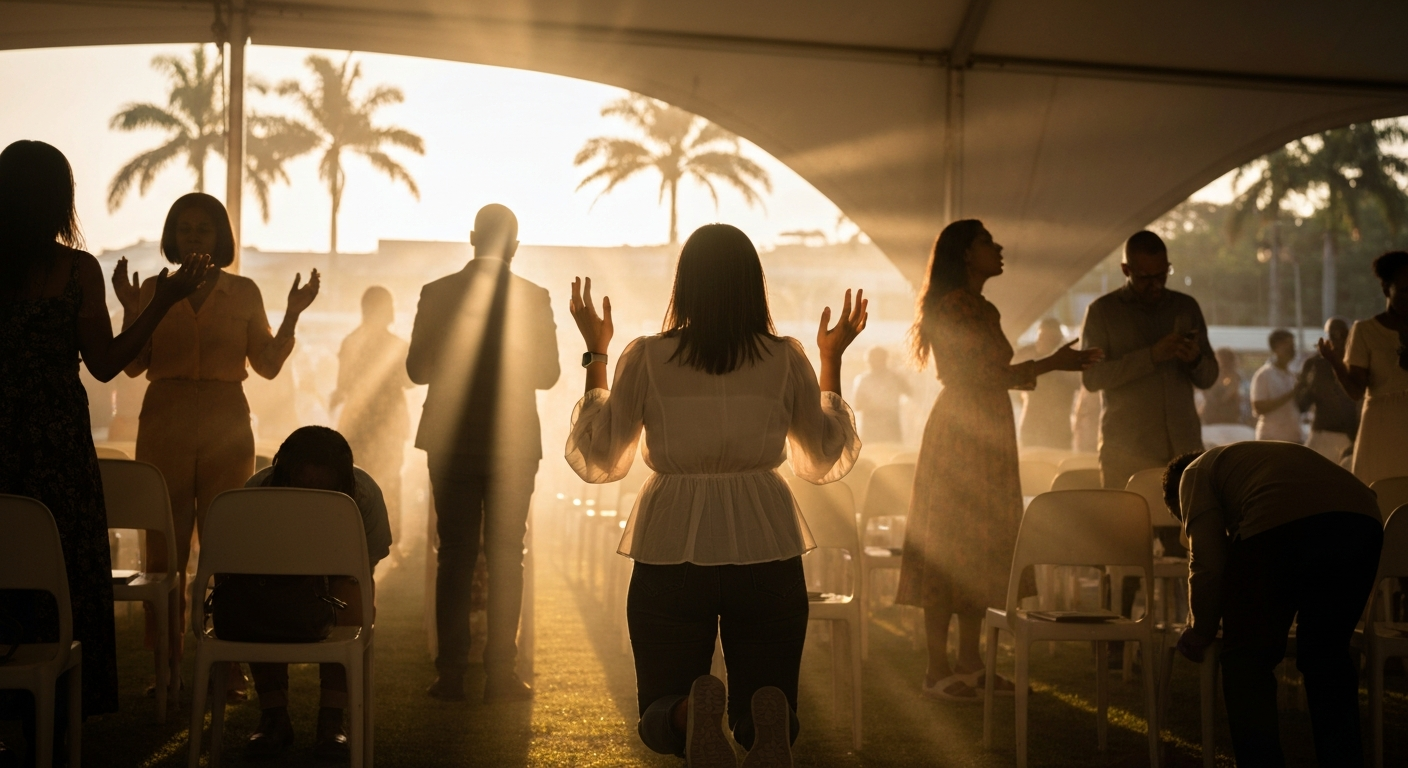 Durban, KwaZulu-Natal
 Miracle of Healing in South Africa
During a 2025 South Africa crusade, Precious was miraculously healed from diabetes through prayer, along with a woman healed from kidney infection.
Read the story Leipzig, Saxony
 Johann Sebastian Bach - Every Note for God's Glory
Johann Sebastian Bach dedicated his entire musical genius to God's glory, writing 'Soli Deo Gloria' on his compositions and serving as a church musician.
Read the story Iran
Iran Inside Iran's Underground Church
Iran's underground church is one of the fastest-growing in the world, the Holy Spirit is reaching Muslims through dreams, healings, and secret house churches despite severe persecution.
Read the story