Babel Means Confused: The Pun Hidden in the Tower's Name (Genesis 11:1-9)
Day sixteen of a walk through the whole Bible to know the God who speaks, opened up. Genesis 11:1-9 in the Hebrew: the pun that ties Babel to balal, why a name (shem) is the thing they reach for, what the one lip (saphah) had to do with their pride, the LORD who comes down to a tower meant to reach Him, and how the scattering is answered when God gives Abram the name Babel could not build and pours it out again at Pentecost. To be known by Him beats any name we make.
Genesis 11 tells the last great story before Abram, and it is built on a pun that the English cannot quite carry. The people set out to make a name. They end up with a name that means the opposite of the one they wanted. To hear the chapter properly, you have to hear it in Hebrew.
What does the name Babel actually mean?
The city is called Babel (H894). In Babylonian, the name meant something grand, bab-ilu, the gate of god, a fitting title for a temple-tower reaching the sky. Genesis refuses that reading and gives its own, tying the name by sound to the Hebrew verb balal (H1101), to mix, mingle, or confuse. "That is why it is called Babel, for there the LORD confused the language of the whole world" (Genesis 11:9). The word they wanted to hear as gate of god, the narrator hears as babble. Their monument to their own greatness gets a name that means jumble. The pun is the verdict.
Why does making "a name" matter so much here?
The whole project is aimed at one Hebrew word. When they say "make a name for ourselves" (Genesis 11:4) they reach for shem (H8034), which means far more than a label. A shem is your reputation, your memorial, the thing spoken of you after you are gone, the mark that says you mattered and lasted. To make your own shem is to secure your own remembrance, to be known on your own terms without reference to anyone above you. The second half of their aim is just as telling: they build so that they will not be scattered over the earth. God had told Noah's family to fill the earth (Genesis 9:1); Babel aimed its whole engineering against that word. This is a people determined to be known while refusing to be known by the One who speaks.
What was the "one language," and why did God confuse it?
The chapter opens, "Now the whole world had one language and a common form of speech" (Genesis 11:1). The Hebrew literally says one saphah (H8193), one lip, and one set of words. That shared lip is what multiplied their power. "If they have begun to do this as one people speaking the same language, then nothing they devise will be beyond them" (Genesis 11:6). United speech in the service of a people who will not listen to God becomes a force that can carry any project, including a ruinous one. So God targets the lip. He confuses the saphah, and the machine stops. It looks like judgment, and it is mercy of a hard kind, because a people this united and this deaf to God would have done real harm with an unbroken run at their tower.
Why does the text dwell on bricks and a tower?
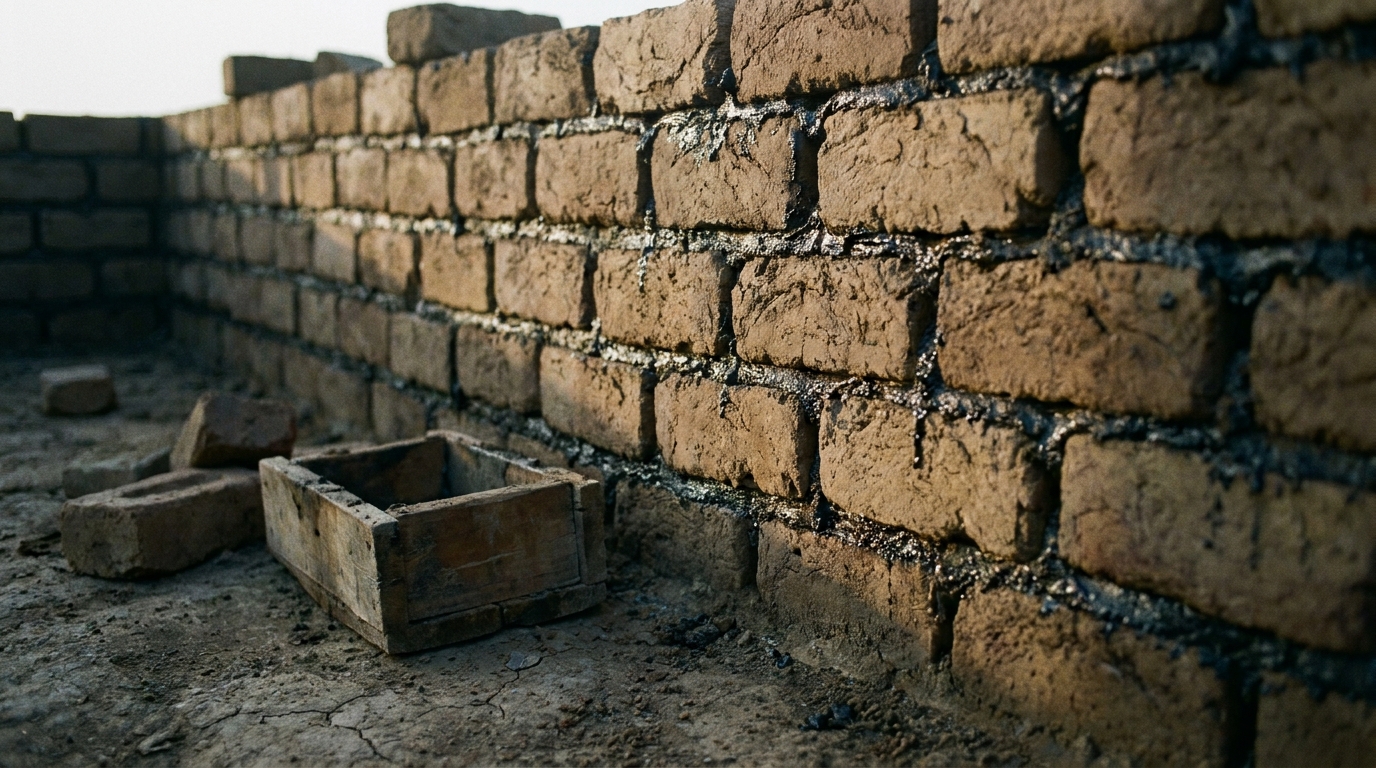
Genesis lingers on the building method. "Come, let us make bricks and bake them thoroughly. So they used brick instead of stone, and tar instead of mortar" (Genesis 11:3). The lebenah (H3843), the mud brick, is a manufactured stone, man-made where the surrounding hill country offered God-made rock. On the plain of Shinar (H8152), the region that becomes Babylon, everything is engineered from scratch, even the stone. Onto it they raise a migdal (H4026), a tower meant to reach the heavens. The picture is a self-made ascent to God's own realm, built of self-made stone, by people who will not do the one thing God actually asked. The tower stretches for the heavens, and the LORD "came down to see the city and the tower" (Genesis 11:5) to find it. The height that was meant to close the distance to God only shows how far off the whole project was.
What happened to the scattering they feared?
Their nightmare was to be puwts (H6327), scattered, dispersed across the land. It is the exact fate they get. "So the LORD scattered them from there over the face of all the earth" (Genesis 11:8). On its own the scattering sounds like a curse. In the flow of Genesis it is how the blessing starts to move, filling the earth as God had wanted from Noah onward and turning the seventy nations of the previous chapter into the field the promise will one day be sent across.
How does Genesis 11 point to Jesus?
Watch the seam between the chapters. Babel grasps for a great shem and is scattered. In the very next scene God says to Abram, "I will make your name great" (Genesis 12:2). The great name comes as a gift here, handed to a man who believes God and goes where he is told. And the confusion of tongues finds its answer at Pentecost, where Jews from every nation heard the apostles and each asked how "each of us hears them in his own native language" (Acts 2:8). At Babel the one lip is broken so pride cannot build; at Pentecost the many tongues are gathered so the gospel reaches every ear. The tower that could not reach heaven is answered by the Son who came down from it and was then given "the name above all names" (Philippians 2:9), the name at which every knee will bow. The name Babel could not make is the name into which God now writes anyone who trusts Him.
Why does this matter for knowing God?
Babel is the clearest picture in Genesis of the alternative to knowing the God who speaks. These people heard His word and built the reverse of it, because they wanted a name of their own more than they wanted to be known by Him. And it collapsed into babble. A life ordered around self-made remembrance ends where Babel ended. So take what God says the way Babel would not. Do not build monuments against His word; write it down, weigh it, and let it set your direction.
This is the study behind today's Doxa Daily Lift on Genesis 11:1-9. Read the Lift here.
Continue this pillar
Hear & Recognise
My Sheep Know My Voice: Hearing God and Testing Every Whisper
How to recognise God's voice the way a child knows their mother's, and why every impression must be tested against the person of Jesus.
How to Hear God's Voice: A Practical Guide for Believers
Wondering if God still speaks? A practical, honest guide to hearing God's voice through Scripture, testimonies, and everyday life. No mysticism required.
Knowing the Voice of God in a World Full of Noise
God's voice is not one option among many. In a world of competing voices, how do you discern what the Holy Spirit is saying? Why it matters more than ever.
Next in the practice
Prophesy
Stewarding the words God gives you for others, and yourself.
Continue to ProphesyTry Doxa free
Three free interactions in your browser. No signup required to start.Free on iOS and Android.
Try Doxa Free

Or get the app for unlimited interactions and live voice.
Keep reading
Credited as Righteousness: How Abram Was Made Right (Genesis 15)
Day twenty-five of a walk through the whole Bible to know the God who speaks, opened up. Genesis 15:1-6 in the Hebrew: the shield (magen) and reward (sakar) God names Himself after the battle; the ancient Nuzi custom of adopting a servant as heir that lies behind Abram's worry; and the two words that carry the whole scene, aman, the root of 'amen', the firmness of a child leaning its full weight on arms it trusts, and chashab, the accountant's word for what God enters in the ledger when He counts Abram's trust as righteousness. Why this quiet night is where Scripture defines faith, and how Paul reads it straight through to Jesus.
Abram Believed God: The Night He Counted the Stars (Genesis 15)
Day twenty-five of a walk through the whole Bible to know the God who speaks. Abram is rich and childless, and God comes to him in the dark with a shield, a reward, and a sky full of stars he cannot count. Abram says his ache out loud, God answers with one child and a countless family, and Abram believes Him, the moment Scripture will call the first man credited as righteous for taking God at His word. Why believing what God says, when your life still argues the other way, is how anyone comes to know Him and be counted right with Him.
From the Grace Record
Real accounts of what God has done, drawn from 2,000 years of believers.
Johann Sebastian Bach - Every Note for God's Glory
Johann Sebastian Bach dedicated his entire musical genius to God's glory, writing 'Soli Deo Gloria' on his compositions and serving as a church musician.
Inside Iran's Underground Church
Iran's underground church is one of the fastest-growing in the world, the Holy Spirit is reaching Muslims through dreams, healings, and secret house churches despite severe persecution.
When the Check Came - George Müller's Orphanages
George Müller cared for over 10,000 orphans in Bristol, England without ever asking anyone for money, trusting only God's provision through prayer.