Pharaoh Lifted Up Two Heads, and Only God Knew Which Way (Genesis 40:9–23)
Passage: Genesis 40:9–23
In this passage: PharaohJoseph
Day ninety of a walk through the whole Bible to know God by what He has said. The Hebrew phrase for lifting a head, the birthday feasts of Egypt's kings, the word for remember that ends in action, and how Israel heard a story about forgetting. Genesis 40:9–23.

Joseph used almost the same Hebrew sentence for both men. To the cupbearer he said, "Pharaoh will lift up your head" (Genesis 40:13), and to the baker, "Pharaoh will lift off your head" (Genesis 40:19). In Hebrew both begin yissa Pharaoh et-roshekha, Pharaoh will lift your head, and the baker's adds one word, me'aleykha, from upon you. The two dreams looked alike, three branches and three baskets, and the two sentences sounded alike. Only the meaning God gave told them apart, and on the third day it held to the letter for both men.
Download Doxa, the app for recording, weighing and remembering prophetic encouragement.


One phrase, three times
To lift up a man's head, in Genesis 40, meant to call him out by name and settle his case. The verb is nasa (H5375), to lift or carry, and the noun is rosh (H7218), head. Together they were the Hebrew way of counting people. When the LORD said to Moses, "When you take a census of the Israelites to number them" (Exodus 30:12), the Hebrew reads when you lift up the head of the Israelites. Numbers 1:2 uses the same words, "Take a census of the whole congregation of Israel", "listing every man by name, one by one" (Numbers 1:2).
An English reader sees lift up in verse 13 and lift off in verse 19 and takes them as two different acts. A Hebrew hearer heard one phrase three times, and the third time came at the feast: "in their presence he lifted up the heads of the chief cupbearer and the chief baker" (Genesis 40:20). Pharaoh called the roll. Both men were counted in front of the whole court, and each man's case was settled there, one to the cup and one to the tree.
The phrase turns up again at the very end of the books of Kings. Judah's king had been a prisoner in Babylon for thirty-seven years when the new king "released King Jehoiachin of Judah from prison" (2 Kings 25:27). The Hebrew says Evil-merodach lifted up the head of Jehoiachin. Exiles who knew Joseph's story could hear in it the phrase Joseph once spoke over the cupbearer, now spoken over their own king.
Birthday feasts and bread baskets
Pharaoh's birthday feast was a royal banquet "for all his officials" (Genesis 40:20), and he used it to settle the cases of his two prisoners in front of them. It is the only birthday feast the Hebrew Bible names. Much later Egyptian evidence shows how kings marked such days. The Rosetta Stone, carved in 196 BC, made the birthday of Ptolemy V a festival, and among the favours it lists, it records that he freed people long held in prison.
The baker's dream fits Egypt closely. The Greek traveller Herodotus, visiting in the fifth century BC, noted that Egyptian men carried loads on their heads and women on their shoulders, the reverse of Greece. A royal baker with three baskets stacked on his head was an ordinary Egyptian sight, and "all sorts of baked goods for Pharaoh" (Genesis 40:17) suits a court whose bakeries turned out many shapes of bread and cake.
The end Joseph named for the baker was the one an Egyptian feared most. Egyptians spent fortunes keeping the body whole for the life they believed came after death, and Joseph said, "the birds will eat the flesh of your body" (Genesis 40:19). It was a hard meaning to say out loud, and Joseph said it because it was God's meaning. Then he waited for the cupbearer to remember him.
Remembering that acts
The Hebrew word for remember in Genesis 40 is zakar (H2142), and Genesis 40:23 uses it beside its opposite, shakach (H7911), to forget. Joseph asked, "please remember me" (Genesis 40:14), and the answer came twice in one line: the cupbearer "did not remember Joseph; he forgot all about him" (Genesis 40:23).
In English, remember happens in the head. In Hebrew, when God is the one who remembers, something happens on the earth. "But God remembered Noah", and in the same verse "God sent a wind over the earth, and the waters began to subside" (Genesis 8:1). "God remembered Rachel. He listened to her and opened her womb" (Genesis 30:22). The noun zikkaron (H2146), a reminder or memorial, is the word in the LORD's command to Moses, "Write this on a scroll as a reminder" (Exodus 17:14).
That is why Joseph tied remembering to speaking, "remember me and show me kindness by mentioning me to Pharaoh" (Genesis 40:14). For the cupbearer, remembering meant opening his mouth in the palace. Two years later he finally did, and his first words used the same root: "Today I recall my failures" (Genesis 41:9), mazkir, I am bringing to remembrance. The same chapter calls Joseph's prison a bor (H953), "this dungeon" (Genesis 40:15), the word for the pit his brothers threw him into (Genesis 37:24). Joseph went from one bor to another, and when the cupbearer spoke at last, Joseph "was quickly brought out of the dungeon" (Genesis 41:14).
A people told not to forget
Israel heard this story as their own, because they had lived in Egypt after Egypt forgot Joseph. Exodus 1:8 records "a new king, who did not know Joseph" (Exodus 1:8), and the rescue began when "God heard their groaning, and He remembered His covenant with Abraham, Isaac, and Jacob" (Exodus 2:24). The people who first heard Genesis read had been forgotten by Pharaoh's palace and remembered by God, and they knew which memory had brought them out.
Moses later charged Israel in words that fit the cupbearer closely, "be careful not to forget the LORD who brought you out of the land of Egypt, out of the house of slavery" (Deuteronomy 6:12). Like the cupbearer restored to the palace, Israel was about to walk into a land of cities they had not built and vineyards they had not planted, and the warning in Genesis 40 was for them.
He has written us down
We come to know God, and to be known by Him, as He remembers us and acts and as we keep what He has said and speak it again. The LORD told Moses to put His word on a scroll as a zikkaron, so that remembering would not depend on a busy official's memory. We are the people who remember what God has said: we weigh it, we write it down with the date in the Doxa app, and we speak it again when the day comes, as the cupbearer finally did before Pharaoh. The God who lifted Joseph's head out of the bor has written His own record of us, "Behold, I have inscribed you on the palms of My hands" (Isaiah 49:16).
This goes with today's Doxa Daily Lift: Joseph Asked to Be Remembered, and God Never Forgot Him (Genesis 40:9–23)
Download Doxa, the app for recording, weighing and remembering prophetic encouragement.
See more of Doxa when you search: add doxa.app as a preferred source on Google (opens in new tab)
Read next


From the Grace Record
1,300+ true stories of God at work.
Real, sourced accounts of what God has said and done, through history and today.
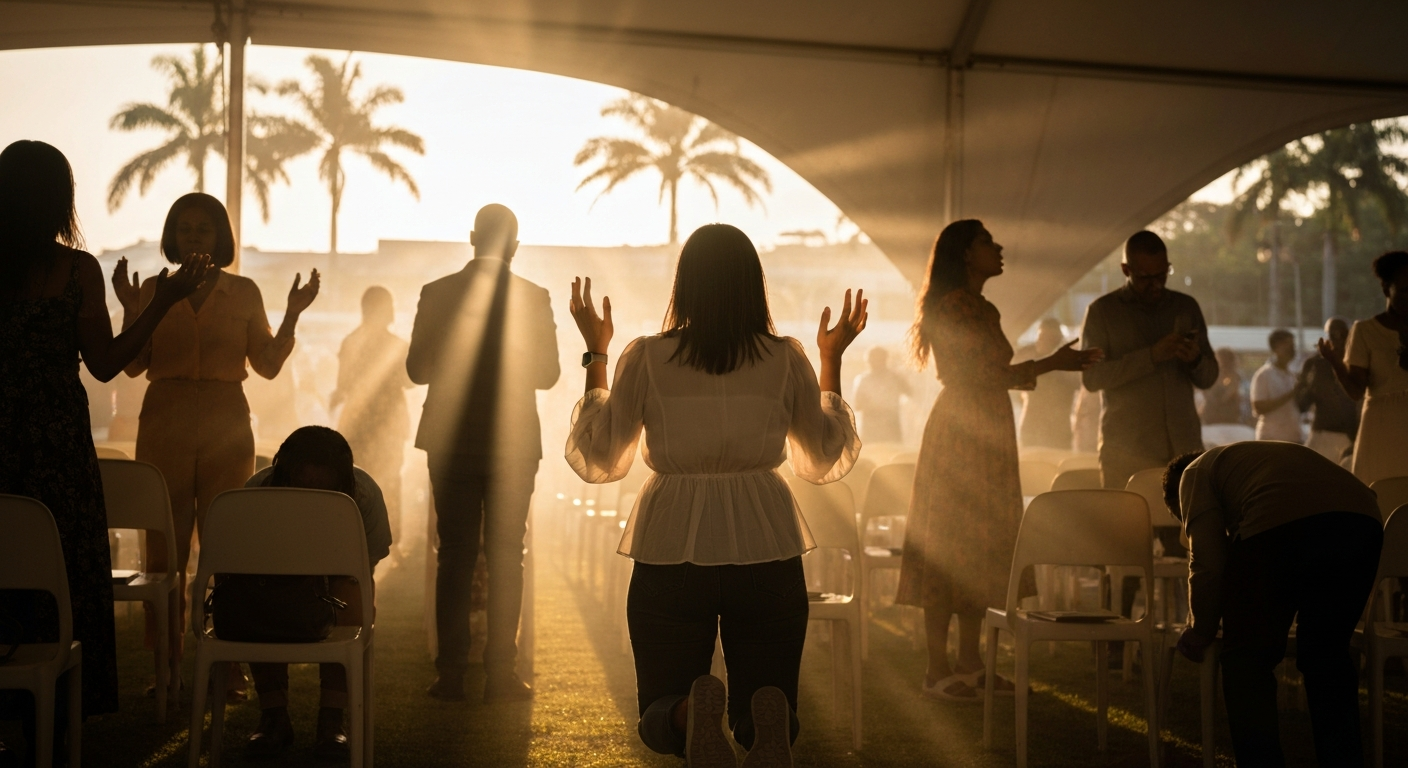 Durban, KwaZulu-Natal
Miracle of Healing in South Africa
During a 2025 South Africa crusade, Precious was miraculously healed from diabetes through prayer, along with a woman healed from kidney infection.
Read the story Smyrna, Asia Minor (modern Turkey)
Polycarp of Smyrna
Polycarp of Smyrna, student of Apostle John, remained faithful to Christ for 86 years until his martyrdom in 155 AD, declaring he could never blaspheme.
Read the story Iran
The Women Who Lead Iran's Underground Church When the Men Were Taken to Prison
When Iranian authorities imprison male house church leaders, women step forward to lead, teach, and multiply the underground church, making them the backbone of the fastest-growing church movement in the world.
Read the story