Joseph Named His Son Fruitful in the Land of Affliction (Genesis 41:37–57)
Passage: Genesis 41:37–57
In this passage: JosephPharaohEgyptOn
Day ninety-three of a walk through the whole Bible to know God by what He has said. The Spirit of God in a king's mouth, the priest of On, the Hebrew word for affliction from Hagar to the Exodus, and grain counted like Abraham's offspring. Genesis 41:37–57.

Joseph gave his second son a name, and with it a sentence holding a Hebrew word his whole family would carry out of Egypt. "God has made me fruitful in the land of my affliction" (Genesis 41:52). The word for affliction is oni (H6040), and the God who saw it in Joseph's life saw it again, centuries later, in the lives of all Jacob's children.
Download Doxa, the app for recording, weighing and remembering prophetic encouragement.


The Spirit of God in a king's mouth
Pharaoh meant that the power of God was in Joseph, because Joseph had told him what only God could know. The Hebrew is ruach (H7307) Elohim (H430), and ruach also means breath and wind.
Egypt called its king the son of Ra, the sun god, and taught that he stood between the gods and the land. That king now said the breath of God was in a Hebrew slave, and he gave his reason: God "has made all this known to you" (Genesis 41:39). The verb is the causative form of yada (H3045), to know. Joseph had used the same verb earlier in that audience, about the famine: "The abundance in the land will not be remembered" (Genesis 41:31), in Hebrew, it will not be known. One verb named what Egypt would lose in the famine and what God gave Joseph before the first good harvest.
Israel heard those words again in their own camp. God said of Bezalel, the craftsman of the tabernacle, "I have filled him with the Spirit of God, with skill, ability, and knowledge" (Exodus 31:3). The first hearers of Genesis knew the Spirit of God as the One who gave a man what he needed for God's work, and they heard that an Egyptian king had seen Him in Joseph. Pharaoh then gave Joseph a new name and a wife from Egypt's priesthood.
A wife from the priest of On
Asenath was the daughter of Potiphera, a priest of On, and Pharaoh gave her to Joseph as his wife (Genesis 41:45). On, On (H204) in Hebrew, was the city the Greeks later called Heliopolis, the city of the sun, the great centre of the worship of Ra. Potiphera's name, Poti-phera (H6319), is Egyptian for the one Ra gave. Pharaoh also gave Joseph an Egyptian name, Zaphenath-paneah (H6847). Its meaning is uncertain. The Egyptologist Georg Steindorff read it in 1889 as the god speaks and he lives. Pharaoh would have meant one of his own gods, and the first readers knew which God had given Joseph every answer he spoke.
With the ring, the name and the marriage, Pharaoh set Joseph inside Egypt's ruling class. Then Joseph named his sons in Hebrew, and both names spoke of God. The first readers knew what came of those boys. Jacob took them as his own: "Ephraim and Manasseh shall be mine, just as Reuben and Simeon are mine" (Genesis 48:5). Two of Israel's tribes had a mother from the house of a priest of the sun, and their father had given them names that told what the God of Abraham had done.
The land of my affliction
"The land of my affliction" (Genesis 41:52) means Egypt, the country where Joseph had been sold, slandered and locked up. The word oni names misery that God sees. Earlier in Genesis the word came up with Hagar, Leah and Jacob, each time with God hearing or seeing it. Hagar heard that "the LORD has heard your cry of affliction" (Genesis 16:11). Leah said, "The LORD has seen my affliction" (Genesis 29:32). Jacob told Laban, "God has seen my affliction and the toil of my hands" (Genesis 31:42).
At the burning bush God Himself spoke the word about Egypt: "I have indeed seen the affliction of My people in Egypt" (Exodus 3:7). Every Israelite farmer spoke it later, standing with his basket of firstfruits before the altar: "the LORD heard our voice and saw our affliction, toil, and oppression" (Deuteronomy 26:7). The first readers had said that sentence with their own mouths. When they heard Joseph call Egypt "the land of my affliction" (Genesis 41:52), they heard the start of their own story, and the God who saw it.
Fruitful twice over
The name Ephraim comes from parah (H6509), to be fruitful, and its ending sounds like a pair, fruitfulness twice over. Ephraim (H669) carried God's first blessing on the human race: "Be fruitful and multiply, and fill the earth" (Genesis 1:28). God spoke the same verb to Noah (Genesis 9:1), to Abraham, "I will make you exceedingly fruitful" (Genesis 17:6), and to Jacob at Bethel (Genesis 35:11). Joseph saw that promise come true when his second son was born in Egypt.
Then it came true for the whole family. "The Israelites were fruitful and increased rapidly" (Exodus 1:7), and when Egypt turned on them, "the more they were oppressed, the more they multiplied and flourished" (Exodus 1:12). The verb behind "oppressed" there is anah (H6031), the root of oni. Affliction and fruitfulness stood side by side in Exodus 1, just as they stood in Ephraim's name, and the God who made Joseph fruitful in his affliction made his people fruitful in theirs. In Joseph's own years of power, that fruitfulness ran past counting.
Grain past counting
Joseph's grain was "like the sand of the sea" (Genesis 41:49) because there was more of it than anyone could count, and those are the words of God's promise to Abraham's family. The Hebrew is kechol hayyam, from chol (H2344), sand. Jacob had prayed God's promise back to Him in the same words: "I will make your offspring like the sand of the sea, too numerous to count" (Genesis 32:12). Joseph "stopped keeping track of it; for it was beyond measure" (Genesis 41:49). Both verses use saphar (H5608), to count.
Saphar also means to tell, to recount. "I will give thanks to the LORD with all my heart; I will recount all Your wonders" (Psalms 9:1). God's gifts ran past what Joseph could count, and they were still his to tell.
Wonders still yours to tell
Joseph knew God in the land of his affliction, and he said so every time he spoke his sons' names. Israel learned to say it over their firstfruits for generations. We know God, and are known by Him, through what He has said and done, and we keep telling it. When He makes you fruitful in a hard place, record it, dated, in the Doxa app, so you can recount His wonders when you can no longer count them, and go on knowing the God who sees affliction and makes His people fruitful in it.
This goes with today's Doxa Daily Lift: Pharaoh Put His Own Ring on Joseph's Finger (Genesis 41:37–57)
Download Doxa, the app for recording, weighing and remembering prophetic encouragement.
See more of Doxa when you search: add doxa.app as a preferred source on Google (opens in new tab)
Read next


From the Grace Record
1,300+ true stories of God at work.
Real, sourced accounts of what God has said and done, through history and today.
 Bristol, City of Bristol
When the Check Came - George Müller's Orphanages
George Müller cared for over 10,000 orphans in Bristol, England without ever asking anyone for money, trusting only God's provision through prayer.
Read the story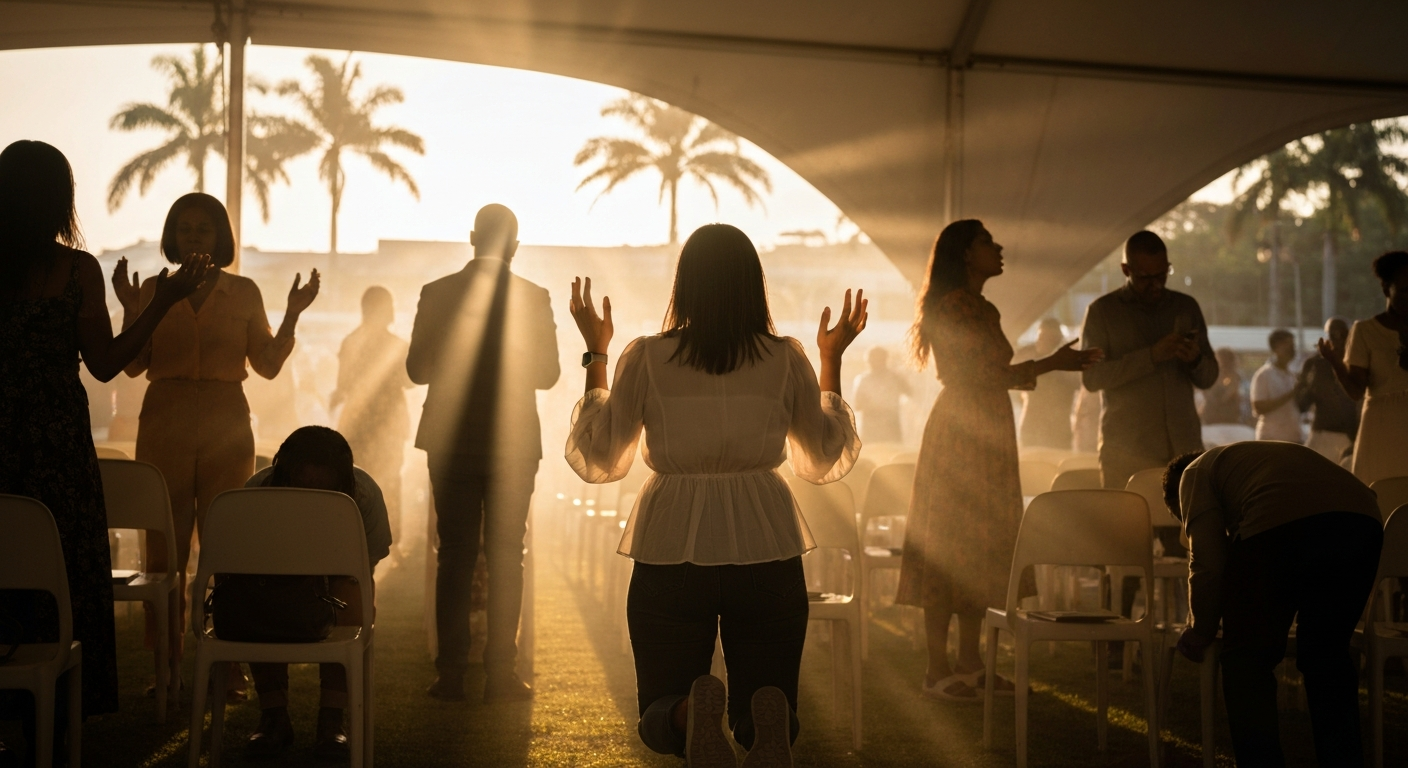 Durban, KwaZulu-Natal
Miracle of Healing in South Africa
During a 2025 South Africa crusade, Precious was miraculously healed from diabetes through prayer, along with a woman healed from kidney infection.
Read the story Smyrna, Asia Minor (modern Turkey)
Polycarp of Smyrna
Polycarp of Smyrna, student of Apostle John, remained faithful to Christ for 86 years until his martyrdom in 155 AD, declaring he could never blaspheme.
Read the story