Sarai Was Barren: Why God Empties a Family Before He Calls It (Genesis 11)
Day eighteen of a walk through the whole Bible to know the God who speaks, opened up. Genesis 11:27-32 in the Hebrew: Terah's toledoth, the barren womb of Sarai, Ur of the Chaldeans, and the word settled that freezes the family in Haran halfway to Canaan. How the God who calls into being what does not yet exist chose a family with no future of its own, so His promise would rest on His word alone.
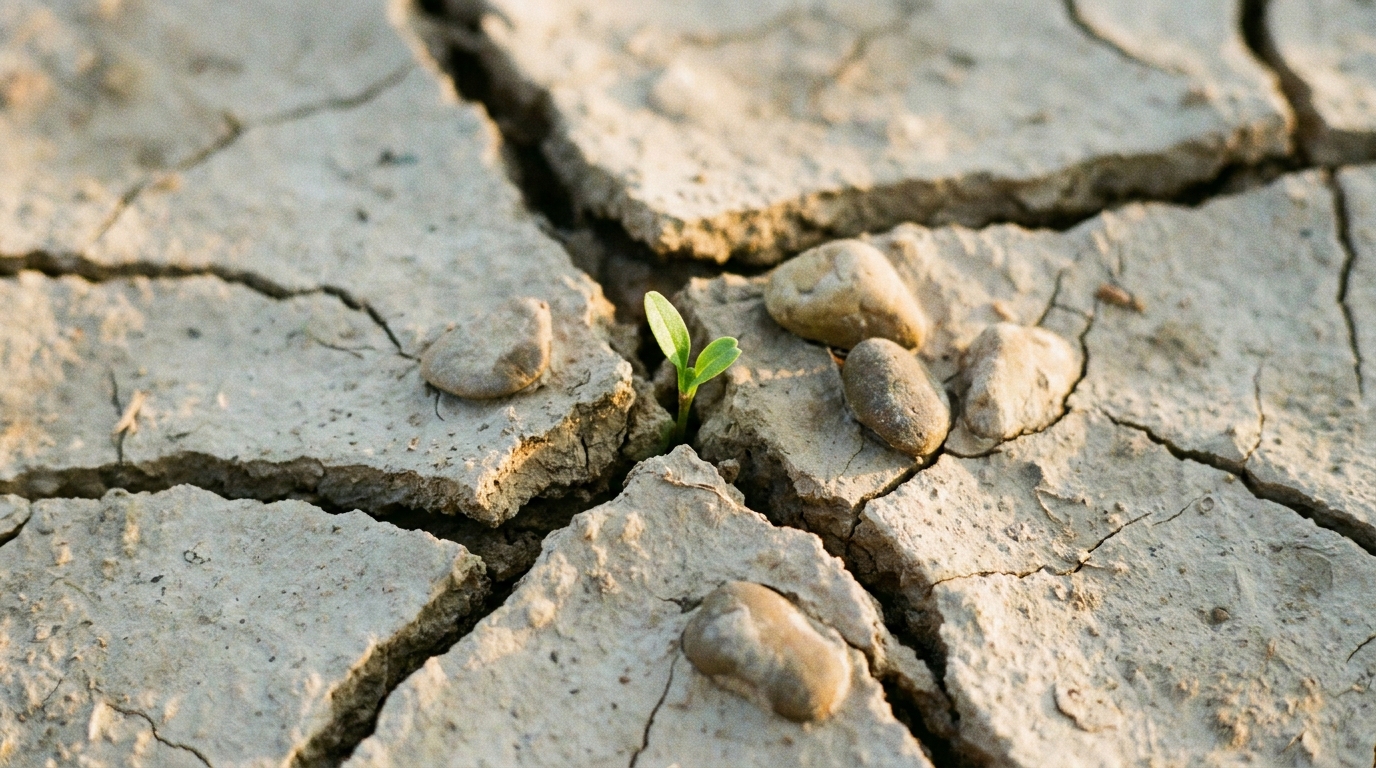
A new chapter of Scripture usually opens on a beginning. This one opens on an ending. Before Genesis 11:27-32 introduces the man God will build a nation from, it takes the family apart, and the Hebrew makes the emptying deliberate. A son buried. A womb closed. A journey abandoned. Read closely, the passage is God clearing away everything the promise could have leaned on, so that when He speaks in the next chapter there is nothing left to lean on but His word.
What does "the account of Terah" set up?
The passage opens, "This is the account of Terah" (Genesis 11:27). The word is toledoth (H8435), a generations-record, the recurring seam that hands the story of Genesis from one keeper of the promise to the next. But this toledoth does something the others do not. It opens with a death: "During his father Terah's lifetime, Haran died in his native land" (Genesis 11:28). The name Terah (H8646) is itself uncertain, linked by many to wandering or delay, and the record that carries his name is a record of loss and stalling. Genesis is naming the family exactly, and the name it gives them is heavy with loss and delay.
Where is Ur of the Chaldeans, and why does it matter?
Twice the passage anchors the family in "Ur of the Chaldeans" (Genesis 11:28), Ur (H218) of the Kasdim (H3778). Ur was no backwater. It was one of the great cities of ancient Sumer, wealthy, literate, and devoted to the moon-god. That detail matters because the Bible later says so plainly. Joshua reminds Israel that "your fathers, including Terah the father of Abraham and Nahor" (Joshua 24:2) "worshiped other gods." The family God is about to call are idolaters in a pagan city, with no claim on Him at all. Whatever comes next will be God reaching down to them, pure initiative on His side.
Why does the Bible stop to say Sarai was barren?
Right at the centre sits the sentence the story turns on: "But Sarai was barren; she had no children" (Genesis 11:30). The word is aqar (H6135), barren, and the Hebrew doubles down, stating outright that she had no child, so no reader can miss it. Genesis plants that line as a theological flag at the head of the whole promise. The wife of the man God will make into a great nation cannot have a single child. Sarai (H8297), whose name God will later change to Sarah (H8283), princess, mother of nations, begins as a closed door. Genesis wants the impossibility on the record before the promise is ever spoken, so that when Isaac is finally born, nobody can mistake whose doing it was.
What does it mean that the family settled in Haran?
Then the family moves, and the wording of the move is the quiet tragedy of the passage. They "set out from Ur of the Chaldeans for the land of Canaan. But when they arrived in Haran, they settled there" (Genesis 11:31). The destination was Canaan (H3667); what they did instead was yashab (H3427), to sit, to dwell, to settle down and stay. They aimed at Canaan and yashab in Haran, and there Terah died. A word study catches something English hides here too. The son who died back in Ur was Haran (H2039), while the city they stopped in is Charan (H2771), a different Hebrew word that only sounds the same to us. The family that lost a son named Haran now sits down in a place that echoes his name, halfway to the land, going no further under its own strength. When God finally speaks, the same journey is finished with a different verb, "So Abram departed, as the LORD had directed him" (Genesis 12:4). Terah settled. Abram, once he had heard, went.
How does this point to Jesus?
Everything the Hebrew has stacked up, death, barrenness, idolatry, a stalled road, is the ground God chose to plant His promise in. The next verses are pure gift. God tells Abram, "I will make you into a great nation, and I will bless you" (Genesis 12:2), and then widens the promise to the whole world, that "all the families of the earth will be blessed through you" (Genesis 12:3). A childless couple from a pagan city are told they will father nations and bless the world, and the only reason it can happen is the God who speaks it. Paul names the God Abraham learned to trust: "the God who gives life to the dead and calls into being what does not yet exist" (Romans 4:17). The closed womb of Sarai is the first note of a song that runs through Scripture, life brought out of deadness, and it does not resolve until a virgin conceives in Nazareth and a sealed tomb opens outside Jerusalem. Paul says the promise to Abram was always aimed there: the offspring is "One, who is Christ" (Galatians 3:16). The blessing for all the families of the earth is Jesus.
Why does this matter for knowing God?
Because this passage teaches us where the God who speaks likes to start. He starts with a family that has run out, so the promise rests on His word and nothing else. To know Him is to trust that His speaking, not your strength, is what holds your future up. Which means the practice this whole walk is built on matters most exactly when you feel settled in your own Haran, stopped short of something He once said. Record what He told you. Read it back on the days it looks impossible. Hold it against the closed door in front of you, and remember that the God who filled a barren womb and carried a stalled family all the way to Bethlehem has not finished speaking over you. He calls into being what does not yet exist. That is the God this walk is teaching you to know.
This is the study behind today's Doxa Daily Lift on Genesis 11:27-32. Read the Lift here.
Continue this pillar
Trust
Encouragement for Hard Seasons: What the Bible Says
When life is hard, you need more than platitudes. Real encouragement from Scripture and real stories of people who found God faithful in their hardest seasons.
Why Gen Z Is Leaving Church (But Not Faith)
Gen Z isn't abandoning God. They're leaving institutions that don't feel real. What the data actually says, why it matters, and what comes next for faith.
Don't Waste the Wait: Speaking Strong When God Says Now
Waiting on God is not passive; it is prayerful, watchful, and ready. Preparing your heart in the silence so you can speak with courage when God says now.
Next in the practice
Hear & Recognise
Knowing God's voice the way a child knows their mother's.
Continue to Hear & RecogniseTry Doxa free
Three free interactions in your browser. No signup required to start.Free on iOS and Android.
Try Doxa Free

Or get the app for unlimited interactions and live voice.
Keep reading
Credited as Righteousness: How Abram Was Made Right (Genesis 15)
Day twenty-five of a walk through the whole Bible to know the God who speaks, opened up. Genesis 15:1-6 in the Hebrew: the shield (magen) and reward (sakar) God names Himself after the battle; the ancient Nuzi custom of adopting a servant as heir that lies behind Abram's worry; and the two words that carry the whole scene, aman, the root of 'amen', the firmness of a child leaning its full weight on arms it trusts, and chashab, the accountant's word for what God enters in the ledger when He counts Abram's trust as righteousness. Why this quiet night is where Scripture defines faith, and how Paul reads it straight through to Jesus.
Abram Believed God: The Night He Counted the Stars (Genesis 15)
Day twenty-five of a walk through the whole Bible to know the God who speaks. Abram is rich and childless, and God comes to him in the dark with a shield, a reward, and a sky full of stars he cannot count. Abram says his ache out loud, God answers with one child and a countless family, and Abram believes Him, the moment Scripture will call the first man credited as righteous for taking God at His word. Why believing what God says, when your life still argues the other way, is how anyone comes to know Him and be counted right with Him.
From the Grace Record
Real accounts of what God has done, drawn from 2,000 years of believers.
Johann Sebastian Bach - Every Note for God's Glory
Johann Sebastian Bach dedicated his entire musical genius to God's glory, writing 'Soli Deo Gloria' on his compositions and serving as a church musician.
Inside Iran's Underground Church
Iran's underground church is one of the fastest-growing in the world, the Holy Spirit is reaching Muslims through dreams, healings, and secret house churches despite severe persecution.
When the Check Came - George Müller's Orphanages
George Müller cared for over 10,000 orphans in Bristol, England without ever asking anyone for money, trusting only God's provision through prayer.