The Flood as Un-Creation: How Genesis 7 Rewinds Genesis 1
Passage: Genesis 7:1–24
In this passage: Noah
Day eight of a walk through the whole Bible to know the God who speaks, opened up. Genesis 7 is written in the vocabulary of Genesis 1, run backward. The great deep, tehom, that the Spirit hovered over on the first page bursts back open; the breath of life, neshamah, that God breathed into man's nostrils is emptied out; God blots out, machah, what He had made. The chapter reads as un-creation, with one sealed box of life carried on top of the ruin, sealed shut by God's own hand, the oldest picture of new creation in Christ.

Genesis 7 is written in the vocabulary of Genesis 1, run backward.
Read the two chapters side by side and the flood reads as God taking the world back apart in the order He built it. The chapter that made the world used certain words for water, for breath, for making. Genesis 7 picks up the same words and reverses each one. This is un-creation, and it is deliberate.
Download Doxa, the app for recording, weighing and remembering prophetic encouragement.


Why does Genesis 7 read like Genesis 1 in reverse?
It reads that way because the flood is God taking apart the world He made, so Genesis tells the unmaking in the words of the making. Start with the verb God chooses for what He is doing. He says He will "wipe from the face of the earth every living thing I have made" (Genesis 7:4), and by the end it is done: "every living thing on the face of the earth was destroyed", and "they were blotted out from the earth" (Genesis 7:23). The Hebrew is machah (H4229), to wipe, to erase, to blot out, the word you would use for scrubbing writing off a page. The Maker is erasing what He made. Six days of God calling things into being, and now the same God methodically wiping the page clean. Genesis 1 fills the earth with living creatures; Genesis 7 empties it, in the reverse order that it filled, until only the ark is left.
What is the great deep that burst forth?
The great deep is the ancient water below the earth, the same deep that covered the formless earth on the Bible's first page. The water comes from two directions at once. "All the fountains of the great deep burst forth, and the floodgates of the heavens were opened" (Genesis 7:11). That phrase, "the great deep", is tehom (H8415), and it is the second word in the Bible's story. Before God made anything, "the earth was formless and void, and darkness was over the surface of the deep", and the Spirit of God hovered over that tehom (Genesis 1:2). On the second day God split those primeval waters, holding some above and some below, and opened a pocket of dry sky and land for life to happen in (Genesis 1:6–7). Genesis 7 unlatches both at once. The waters above pour down and the waters below climb up, and the space God had opened between them closes. The world drowns because the boundary God set on the second day is pulled, and the deep comes back to take its old ground.
Whose breath is the breath of life?
The breath of life is God's own breath, the breath He first gave to the man He formed from dust. The chapter reaches back past the second day to the sixth. Everything died, it says, "everything that had the breath of life in its nostrils" (Genesis 7:22). Breath here is neshamah (H5397), and there is one earlier use of it: God "breathed the breath of life into his nostrils, and the man became a living being" (Genesis 2:7). The same word, the same nostrils. What God once leaned down and breathed into the first man, the flood quietly draws back out of every creature that carried it. Creation was God putting His breath into dust. The flood is that breath returning to Him, and the dust settling back under the water.
Who shut the door, and why does it matter?
The LORD Himself shut the door, and it matters because God's own hand is what kept the seed of the new world safe through the flood. Here the reversal breaks, because Genesis 7 is doing more than erasing. Riding on top of the drowned world is one sealed wooden box holding a breeding pair of every living kind, and seven pairs of the clean ones brought aboard in advance (Genesis 7:2–3). That box is a seed bank for the whole living world. When the water goes down, everything needed to fill the earth again, and to build the first altar on the far side (Genesis 8:20), is already inside. Genesis 7 runs creation backward so that Genesis 8 can start it forward again from the ark.
And what guarantees that seed survives is one act, and it is God's. "Then the LORD shut him in" (Genesis 7:16). The verb is sagar (H5462), to close, to shut fast. Noah loaded the ark; God sealed it, against the very tehom He was about to unleash. The same hand that opened the floodgates closed the door and held it. Un-creation and rescue run on the same divine hand, and only the sealed-in survive.
This is the oldest salvation picture in the Bible, and the New Testament reads it exactly this way. Peter looks at the eight people "saved through water" and calls the flood a picture of baptism (1 Peter 3:20–21). Paul writes that anyone in Christ is a new creation, the old order drowned and a new one brought up out of the water (2 Corinthians 5:17). Jesus is the door God shuts and will not reopen to the flood. When the present world is unmade at the last, the people God has sealed into His Son will rise into a washed earth the way Noah's ark rose over a drowned one.
The Doxa Daily Lift today stayed on that shut door and what it means to be kept by a hand stronger than your own. Read it here. The flood is God un-making the world, and the ark is the first proof that His un-making always carries a seed of the world to come.
Download Doxa, the app for recording, weighing and remembering prophetic encouragement.
Read next


From the Grace Record
Real accounts of what God has done, drawn from 2,000 years of believers.
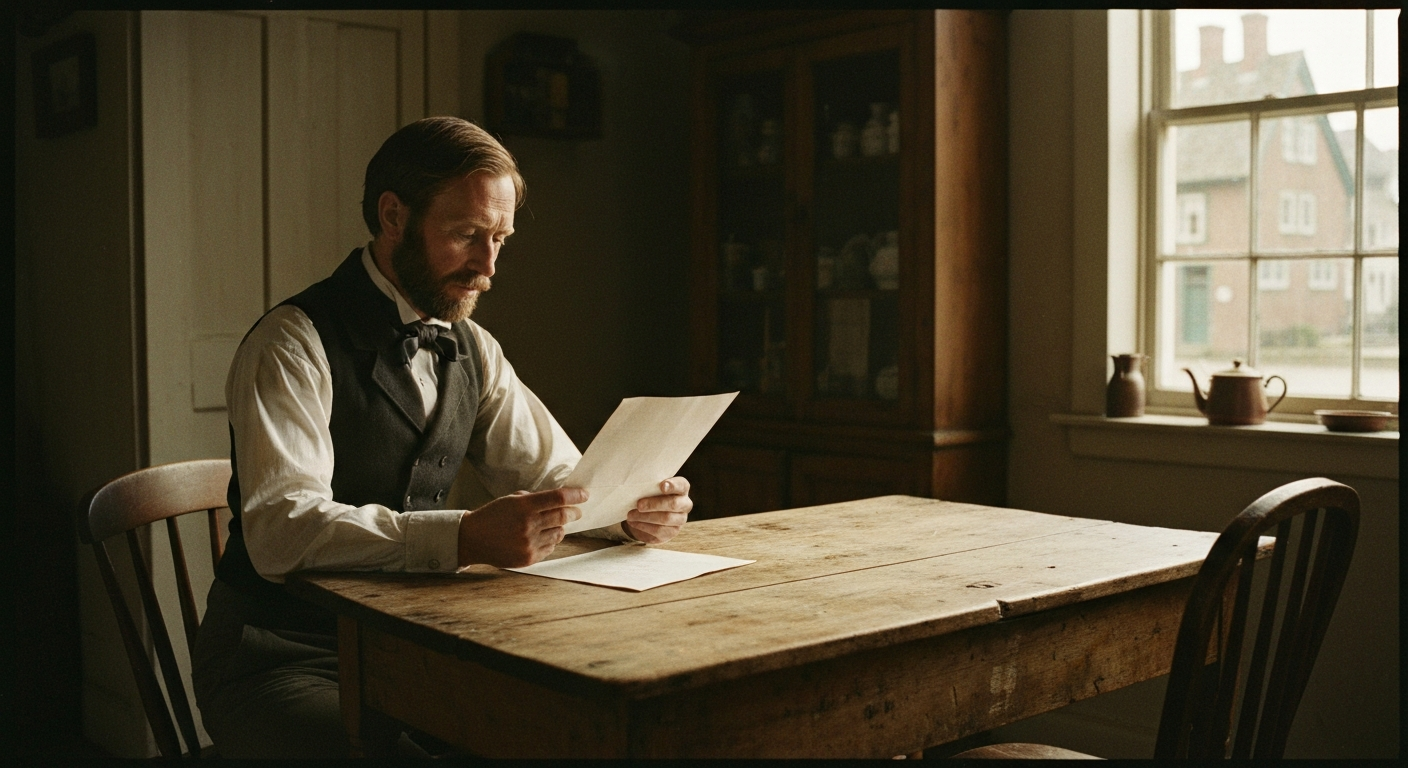 Bristol, City of Bristol
 When the Check Came - George Müller's Orphanages
George Müller cared for over 10,000 orphans in Bristol, England without ever asking anyone for money, trusting only God's provision through prayer.
Read the story Iran
Iran Inside Iran's Underground Church
Iran's underground church is one of the fastest-growing in the world, the Holy Spirit is reaching Muslims through dreams, healings, and secret house churches despite severe persecution.
Read the story Samaria / Rome
 Justin Martyr: Philosopher Found True Wisdom
A Greek philosopher in 2nd century Rome searched through Stoicism, Platonism, and other philosophies before encountering Christianity.
Read the story