The Table of Nations: Why God Names Every People on Earth (Genesis 10)
Day fourteen of a walk through the whole Bible to know the God who speaks. The flood is over, and Genesis handles the new world in a surprising way, by writing down the names of every people on earth. Genesis 10:1-20, the sons of Japheth and Ham, Nimrod and his cities, and why God keeps the names of the nations before He ever calls one man to bless them.
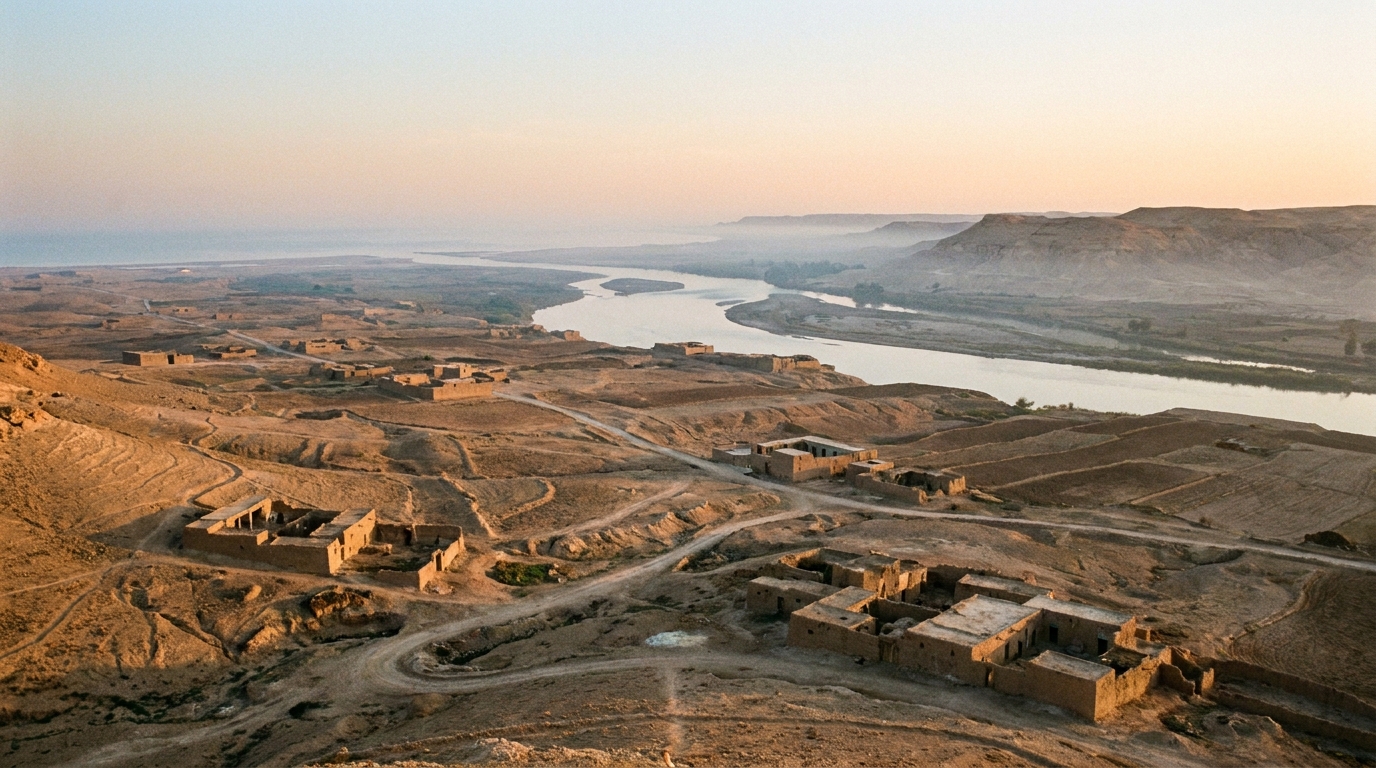
After the flood, the world starts over as a list.
Genesis has just walked us through the ark, the receding water, the rainbow, and Noah's worst night in his tent. Now the pace drops right down. Chapter 10 sets out row after row of names: the sons of Japheth, the sons of Ham, and the peoples who came from them, spreading across the coastlands "according to their languages, by clans within their nations" (Genesis 10:5). It reads like a register. It is easy to skim. But someone kept this record on purpose, and the purpose is the whole point.
This is the record of the whole human family, written while the water is barely off the ground. Names fanning out across coastlands and river valleys, every one of them set down and kept. Nobody is left off. Before there is an Israel, before there is a single chosen family, God already holds the name of every nation that will ever hear of Him.
Who was Nimrod, the mighty hunter?
One name in the list gets a story of its own. Cush fathers Nimrod, "who began to be a mighty one on the earth" (Genesis 10:8), a "mighty hunter before the LORD" (Genesis 10:9). His kingdom starts in Babylon, in the land of Shinar, and reaches up into Assyria, where he builds Nineveh (Genesis 10:10-11). Hold those two names, Babylon and Nineveh. They are the cities that will spend the rest of the Bible setting themselves against God and His people. The first kingdom in Scripture is a man making himself great and building a name out of brick.
Read on one chapter and you meet the same land again. At Babel, on that same plain of Shinar, people say they will "make a name for ourselves" (Genesis 11:4). That is the road Nimrod is already on. You can spend a whole life making your own name, loud and mighty and carved over a city gate, and still never be known by the God who made you.
Why does God write down the nations?
Because a name given outlasts a name seized. Genesis keeps this long list so that, one chapter later, when God calls one old man out of these very nations and promises that "all the families of the earth will be blessed through you" (Genesis 12:3), you already know who all those families are. You have just read their names. The table is the guest list, written before the invitation ever goes out.
And the phrase that keeps repeating, "according to their languages," points far past this chapter. God scatters those languages at Babel (Genesis 11:9). He hands them back at Pentecost, when people from every nation hear the disciples "declaring the wonders of God in our own tongues" (Acts 2:11). And He gathers them home in John's vision of "a multitude too large to count, from every nation and tribe and people and tongue" standing before the throne (Revelation 7:9). Genesis 10 is where that crowd first appears. And it gets there through Jesus. The blessing promised to Abram came in Him, a son of this very line, and He sent His followers out to "make disciples of all nations" (Matthew 28:19).
So here is where it lands. God knows the nations one clan at a time, and He knows you the same way, by name. That is what it means to be known by Him, and it is the reason His word to you is worth keeping. The only question is which name you are living for, the one you are straining to build, or the one He is ready to give.
What name are you spending yourself to make, and what would change if you wrote down today that God already knows yours, and holds it? Sit with that before you close the book.
Deeper study today in the Doxa Deeper Dive, on the Hebrew behind Nimrod and his cities, why the whole table adds up to seventy nations, and how the languages of Genesis 10 run all the way to Pentecost. Read it here.
Continue this pillar
Hear & Recognise
My Sheep Know My Voice: Hearing God and Testing Every Whisper
How to recognise God's voice the way a child knows their mother's, and why every impression must be tested against the person of Jesus.
How to Hear God's Voice: A Practical Guide for Believers
Wondering if God still speaks? A practical, honest guide to hearing God's voice through Scripture, testimonies, and everyday life. No mysticism required.
Knowing the Voice of God in a World Full of Noise
God's voice is not one option among many. In a world of competing voices, how do you discern what the Holy Spirit is saying? Why it matters more than ever.
Next in the practice
Prophesy
Stewarding the words God gives you for others, and yourself.
Continue to ProphesyTry Doxa free
Three free interactions in your browser. No signup required to start.Free on iOS and Android.
Try Doxa Free

Or get the app for unlimited interactions and live voice.
Keep reading
Credited as Righteousness: How Abram Was Made Right (Genesis 15)
Day twenty-five of a walk through the whole Bible to know the God who speaks, opened up. Genesis 15:1-6 in the Hebrew: the shield (magen) and reward (sakar) God names Himself after the battle; the ancient Nuzi custom of adopting a servant as heir that lies behind Abram's worry; and the two words that carry the whole scene, aman, the root of 'amen', the firmness of a child leaning its full weight on arms it trusts, and chashab, the accountant's word for what God enters in the ledger when He counts Abram's trust as righteousness. Why this quiet night is where Scripture defines faith, and how Paul reads it straight through to Jesus.
Abram Believed God: The Night He Counted the Stars (Genesis 15)
Day twenty-five of a walk through the whole Bible to know the God who speaks. Abram is rich and childless, and God comes to him in the dark with a shield, a reward, and a sky full of stars he cannot count. Abram says his ache out loud, God answers with one child and a countless family, and Abram believes Him, the moment Scripture will call the first man credited as righteous for taking God at His word. Why believing what God says, when your life still argues the other way, is how anyone comes to know Him and be counted right with Him.
From the Grace Record
Real accounts of what God has done, drawn from 2,000 years of believers.
Polycarp of Smyrna
Polycarp of Smyrna, student of Apostle John, remained faithful to Christ for 86 years until his martyrdom in 155 AD, declaring he could never blaspheme.
The Women Who Lead Iran's Underground Church When the Men Were Taken to Prison
When Iranian authorities imprison male house church leaders, women step forward to lead, teach, and multiply the underground church, making them the backbone of the fastest-growing church movement in the world.
Johann Sebastian Bach - Every Note for God's Glory
Johann Sebastian Bach dedicated his entire musical genius to God's glory, writing 'Soli Deo Gloria' on his compositions and serving as a church musician.