Who Is Melchizedek? The Priest-King Who Blesses Abram (Genesis 14)
Day twenty-four of a walk through the whole Bible to know the God who speaks. Abram rides home from the battle, and two kings come out to meet him: the king of Sodom, who wants to strike a deal, and Melchizedek, a priest-king who appears once in Genesis and never again, bringing bread and wine and a blessing. Melchizedek names the God Abram serves, Creator of heaven and earth; and an hour later Abram borrows those very words to turn down every reward Sodom offers him. Why knowing who God is set Abram free to refuse a fortune, and how a priest with no recorded father points all the way to Christ.
Abram is coming home from a battle he had no business winning.
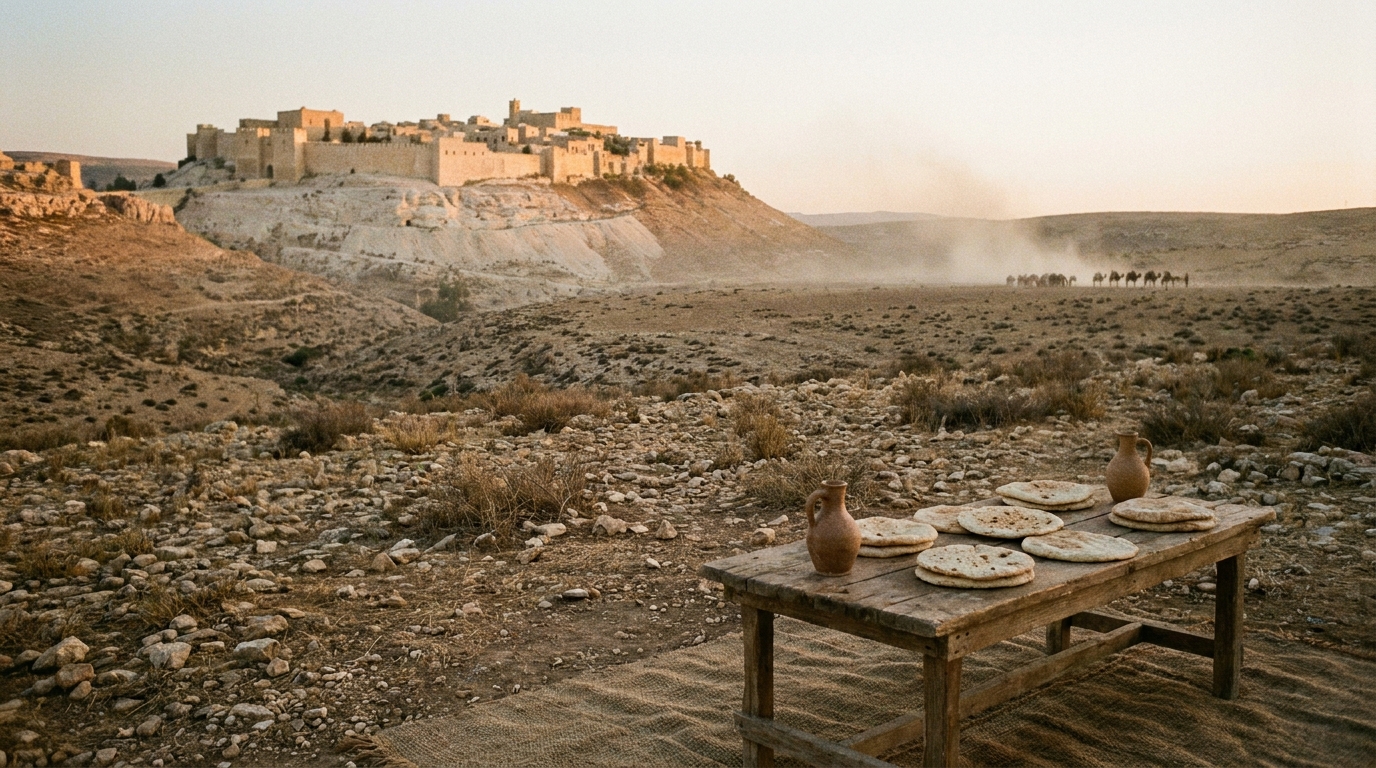
Behind him are the freed captives and the plunder of five cities. Ahead of him, two kings come out to meet him in the Valley of Shaveh. One is the king of Sodom, and everyone can guess what he wants. The other is a man Genesis has not named once before and will not name again. "Then Melchizedek king of Salem brought out bread and wine" (Genesis 14:18). A priest of God Most High, come with a blessing for a tired soldier.
The first thing that happens after the victory is a blessing. "Blessed be Abram by God Most High, Creator of heaven and earth" (Genesis 14:19), and he keeps going, "blessed be God Most High, who has delivered your enemies into your hand" (Genesis 14:20). A stranger names the God Abram serves. The One who made everything there is. The One who just handed him the battle. Abram takes it in and answers with his hands. "Then Abram gave Melchizedek a tenth of everything" (Genesis 14:20). A tenth of all he is carrying, given away before he has said a word, to the God he has just heard named.
Then the king of Sodom makes his offer, and it sounds generous. "Give me the people, but take the goods for yourself" (Genesis 14:21). By every custom of the day the spoil was Abram's to keep. He turns it down flat. "I have raised my hand to the LORD God Most High, Creator of heaven and earth" (Genesis 14:22), he says, "that I will not accept even a thread, or a strap of a sandal, or anything that belongs to you, lest you should say, 'I have made Abram rich'" (Genesis 14:23).
They are almost Melchizedek's own words. God Most High, Creator of heaven and earth. Abram heard God named an hour ago by a stranger, and now that name is on his own lips as an oath. He held onto what he heard, and it set what he did next. If the God he serves owns heaven and earth, a king of Sodom cannot make him rich. He would rather stay poor and let God do the providing.
That is what it looks like to know the God who speaks. A true word about who God is, taken in and held, changes what your hand reaches for. And this priest who steps out of nowhere with bread and wine, king of righteousness and king of peace, with no father or mother named in the record, points past himself. Generations later the Scriptures say of the coming King, "You are a priest forever in the order of Melchizedek" (Psalms 110:4). The bread, the wine, the blessing, a priest who was also a king. Abram met a small early picture of Jesus on the road home, long before anyone could have known it.
So do what Abram did. When someone reminds you who God is, and the reminder holds true to Scripture, write it down and keep it where you can find it again. Then let it set your next decision, the way Melchizedek's blessing set Abram's.
What has God shown you about who He is that you could stand on the next time an easier offer comes along?
Deeper study today in the Doxa Deeper Dive, on what the name Melchizedek means, the Hebrew behind 'Creator of heaven and earth', and why the book of Hebrews says this one roadside meeting outranks the whole priesthood that came after it. Read it here.
Continue this pillar
Trust
Encouragement for Hard Seasons: What the Bible Says
When life is hard, you need more than platitudes. Real encouragement from Scripture and real stories of people who found God faithful in their hardest seasons.
Why Gen Z Is Leaving Church (But Not Faith)
Gen Z isn't abandoning God. They're leaving institutions that don't feel real. What the data actually says, why it matters, and what comes next for faith.
Don't Waste the Wait: Speaking Strong When God Says Now
Waiting on God is not passive; it is prayerful, watchful, and ready. Preparing your heart in the silence so you can speak with courage when God says now.
Next in the practice
Hear & Recognise
Knowing God's voice the way a child knows their mother's.
Continue to Hear & RecogniseTry Doxa free
Three free interactions in your browser. No signup required to start.Free on iOS and Android.
Try Doxa Free

Or get the app for unlimited interactions and live voice.
Keep reading
Credited as Righteousness: How Abram Was Made Right (Genesis 15)
Day twenty-five of a walk through the whole Bible to know the God who speaks, opened up. Genesis 15:1-6 in the Hebrew: the shield (magen) and reward (sakar) God names Himself after the battle; the ancient Nuzi custom of adopting a servant as heir that lies behind Abram's worry; and the two words that carry the whole scene, aman, the root of 'amen', the firmness of a child leaning its full weight on arms it trusts, and chashab, the accountant's word for what God enters in the ledger when He counts Abram's trust as righteousness. Why this quiet night is where Scripture defines faith, and how Paul reads it straight through to Jesus.
Abram Believed God: The Night He Counted the Stars (Genesis 15)
Day twenty-five of a walk through the whole Bible to know the God who speaks. Abram is rich and childless, and God comes to him in the dark with a shield, a reward, and a sky full of stars he cannot count. Abram says his ache out loud, God answers with one child and a countless family, and Abram believes Him, the moment Scripture will call the first man credited as righteous for taking God at His word. Why believing what God says, when your life still argues the other way, is how anyone comes to know Him and be counted right with Him.
From the Grace Record
Real accounts of what God has done, drawn from 2,000 years of believers.
Johann Sebastian Bach - Every Note for God's Glory
Johann Sebastian Bach dedicated his entire musical genius to God's glory, writing 'Soli Deo Gloria' on his compositions and serving as a church musician.
Inside Iran's Underground Church
Iran's underground church is one of the fastest-growing in the world, the Holy Spirit is reaching Muslims through dreams, healings, and secret house churches despite severe persecution.
When the Check Came - George Müller's Orphanages
George Müller cared for over 10,000 orphans in Bristol, England without ever asking anyone for money, trusting only God's provision through prayer.