Choosing a Free Small Group Curriculum on Hearing God's Voice
A practical guide for small group leaders: how to sequence the three free courses on hearing God's voice, from cautious groups to those ready to go deep.

Where most groups get stuck
You want your small group to grow in hearing God. That much is clear. What is less clear is where to begin on a Tuesday night with eight people, some of whom have vivid stories of God's voice and some of whom would quietly say they have never heard anything at all.
Most churches have plenty of material on personal devotion and plenty on Bible study. Far fewer have a shared curriculum that trains a whole group to hear what God is saying, weigh it together, and hold onto the good, as an ongoing practice the group keeps and returns to. So the topic gets improvised. A leader opens with "let's each share what we sense God might be saying," and without a shared frame the room drifts into one of two ditches: a warm, vague chat that weighs nothing, or a few confident voices steering everyone else.
A good curriculum closes that gap. It gives a group a shared vocabulary, a shared set of tests, and a shared rhythm, so that hearing God becomes something the group does together well rather than something a few gifted members do alone. Here is what to look for, the three free courses Doxa offers, and how to run whichever one fits your group.
What a good curriculum on hearing God's voice has to do
Before you pick material, know what you are asking it to accomplish. A curriculum worth a term of your group's evenings does five things.
It teaches testing as much as hearing. Any honest study of the voice of God has to hand a group the tools to weigh what they hear. Paul is direct about this: "Do not extinguish the Spirit. Do not treat prophecies with contempt, but test all things. Hold fast to what is good." (1 Thessalonians 5:19-21) A course that only stirs people to expect God's voice, without training them to test it against Scripture, leaves a group more confident and less safe. Look for material that spends as much time on discernment as on expectation.
It makes weighing a shared act. Scripture assumes discernment happens in community: "Two or three prophets should speak, and the others should weigh carefully what is said." (1 Corinthians 14:29) A good curriculum builds that into how the group meets: no single member, and no single leader, is the one who decides what God is saying about someone else's life. That is a pastoral safeguard as much as a spiritual one, and it belongs in the design of the course, not just the theology.
It keeps the aim of hearing in view. Paul gives a plumb line for what God's encouragement is for: "But he who prophesies speaks to men for their edification, encouragement, and comfort." (1 Corinthians 14:3) Good material keeps returning the group to that question: does this build up, encourage, and comfort in a way that fits the character of God shown in Jesus? A group trained on that question learns to tell the difference between a strong feeling and a trustworthy word.
It gives the group something to practise. Hearing God is a craft, and crafts are learned by doing. The best curricula pair each session's teaching with practice: listening prayer, testing a word together, writing something down, so that by the end every participant has actually heard, tested, and recorded, rather than only discussed the idea of it.
It ends in remembering. God's encouragement is for the whole faith journey, not only the moment it is received. A curriculum that stops at the moment of hearing has done half the job. The discipline of remembering (recording, weighing, and holding what God has said and done, as individuals and as a group) is the neglected half, and it is where a word actually bears fruit over years. Look for material that trains a group to keep what they hear, so it can be returned to when a season turns hard.
Three free courses, and how to sequence them
Doxa publishes three free small group courses, all readable in full at doxa.app/courses, each built for a 90-minute weekly session with pre-reading, Scripture, discussion, and practice. They form a sequence, and knowing where your group sits helps you choose a starting point.
Does God Still Speak?: six weeks, and the place to begin if your group is cautious or mixed in conviction. It is written for believers who love Jesus and honour Scripture but have been taught that the Spirit's gift of personal speech ended with the apostles, and for pastors leading congregations where those convictions sit side by side. It walks the question honestly, spends a full week honouring the pastoral wisdom of the cessationist tradition, and closes with three honourable destinations rather than a verdict. If half your group would hesitate at the word "prophecy," start here.
Hearing His Voice: seven weeks, and the core of the curriculum. It assumes a group that already believes God speaks and wants to grow in the craft of recognising, testing, recording, and speaking what he says. Its anchor is Paul's charge: "Earnestly pursue love and eagerly desire spiritual gifts, especially the gift of prophecy." (1 Corinthians 14:1) Over seven sessions the group sharpens its listening, settles identity, learns the biblical tests, practises remembering well, frames everything with love, and learns to speak an encouraging word for building others up. By the end each participant has heard, tested, recorded, and spoken.
Promise to Promised Land: six weeks, for a group carrying a word through the long wait between a promise and its fulfilment. It is for the cave and prison seasons, the delays, and the endurance it takes to hold a promise across the years it takes to come to pass. Run this one with a group that has already heard something from God and needs help stewarding it faithfully through the long middle.
For most churches the natural path is simple. A cautious or mixed group begins with Does God Still Speak? and, if the group is ready, moves into Hearing His Voice. A group already at home with God's voice can start directly with Hearing His Voice. And Promise to Promised Land serves a group in a waiting season, at any point. You are free to run just one; they stand on their own.
What a facilitator actually needs
Leaders often hesitate to run a course like this because they assume they need to be the resident expert on hearing God. They do not. A facilitator's job is to hold the room, keep the group honest, and make sure everyone gets to participate; the material carries the teaching.
A few things do help. Keep at least two leaders in the room, so that weighing stays a shared act and no single voice steers the group. Name the posture out loud at the start of each session: the group is here to take seriously what people sense and to test it carefully, holding both at once. Give the practice real time rather than rushing to a tidy conclusion; most honest weighing lands in "this is good, hold it," "this needs more time," or "this does not hold up," and all three are worth naming plainly. And give whatever surfaces somewhere to be written down, because a word the group cannot return to cannot really be held or tested over time.
Give what your group hears somewhere to live
Every course above ends in the same place: a group that is hearing more, testing better, and (if nothing captures it) forgetting most of it by the following week. The teaching evaporates unless the practice has somewhere to land.
This is the gap Doxa was built to close, and it fits a small group running any of these courses. Each member records what they believe God said in their own private Encouragement Vault, or brings it into a private group where trusted leaders help weigh it against Scripture together, and the group notes where a conversation landed and returns to it as life unfolds. Doxa is free to start, with no public feeds and no ads, and it never originates, writes, or interprets a word: people hear, they record, and the community weighs; the app is only the honest place it all lands, so a course on hearing God's voice becomes a lasting practice of stewarding it well.
Run one of these courses and give what surfaces somewhere to live, and you build the culture a whole church is aiming for: a community where God is expected to speak, where what he says is weighed together, and where the good words are recorded and remembered until, years later, someone stands on one through a season nothing else could carry them through. The same practice serves a youth ministry just as well, started early in the years it forms most deeply.
FAQ
What is the best free small group curriculum on hearing God's voice?
Look for material that teaches testing as much as hearing, treats weighing as a shared act rather than a solo one, keeps returning the group to whether a word builds up and fits the character of God (1 Corinthians 14:3), gives the group something to practise each week, and ends in recording and remembering what God says. Doxa publishes three free courses that do this: Does God Still Speak?, Hearing His Voice, and Promise to Promised Land, each built for a weekly 90-minute session and readable in full at doxa.app/courses. Which one you start with depends on where your group sits.
Which course should a cautious or mixed congregation start with?
Start with Does God Still Speak? It is a six-week inquiry written for believers who love Jesus and honour Scripture but are unsure whether God still speaks personally today, and for pastors leading congregations where cautious and open convictions sit side by side. It spends a full week honouring the pastoral wisdom of the cessationist tradition and closes with three honourable destinations rather than pressing anyone to a conclusion. A group can then move into Hearing His Voice if and when it is ready.
Do I need to be an expert on prophecy to lead the course?
No. A facilitator's job is to hold the room, keep the group honest, and make sure everyone participates; the material carries the teaching. It helps to keep at least two leaders present so that weighing stays a shared act and no single voice steers the group, to name the posture of testing carefully out loud, and to give whatever surfaces somewhere to be written down so it can be weighed over time. Scripture treats discernment as something two or three do together while others weigh carefully (1 Corinthians 14:29), which takes the pressure off any one leader to have the answers.
Are Doxa's small group courses actually free?
Yes. All three courses (Does God Still Speak?, Hearing His Voice, and Promise to Promised Land) are free to read in full at doxa.app/courses, with facilitator notes available for leaders who want to print and walk into a room prepared. The Doxa app itself is free to start, with no public feeds and no ads, so a group can use it to record and weigh what they hear together as they work through a course.
Keep Reading
- Weighing Prophecy: How Churches Test Words Together
- How to Start a Prophetic Ministry Team in Your Church
- I Wrote a 6-Week Course for Christians Who Aren't Sure God Still Speaks
Doxa helps people record what they believe God is saying, weigh it together against Scripture, and hold the good words until they come to pass. It is free to start, with no public feeds or ads. Explore the free small group courses on hearing and weighing the voice of God, see how Doxa works for your whole church, or for youth leaders.
Download Doxa, the app for recording, weighing and remembering prophetic encouragement.


Read next


From the Grace Record
Real accounts of what God has done, drawn from 2,000 years of believers.
 Samaria / Rome
 Justin Martyr: Philosopher Found True Wisdom
A Greek philosopher in 2nd century Rome searched through Stoicism, Platonism, and other philosophies before encountering Christianity.
Read the story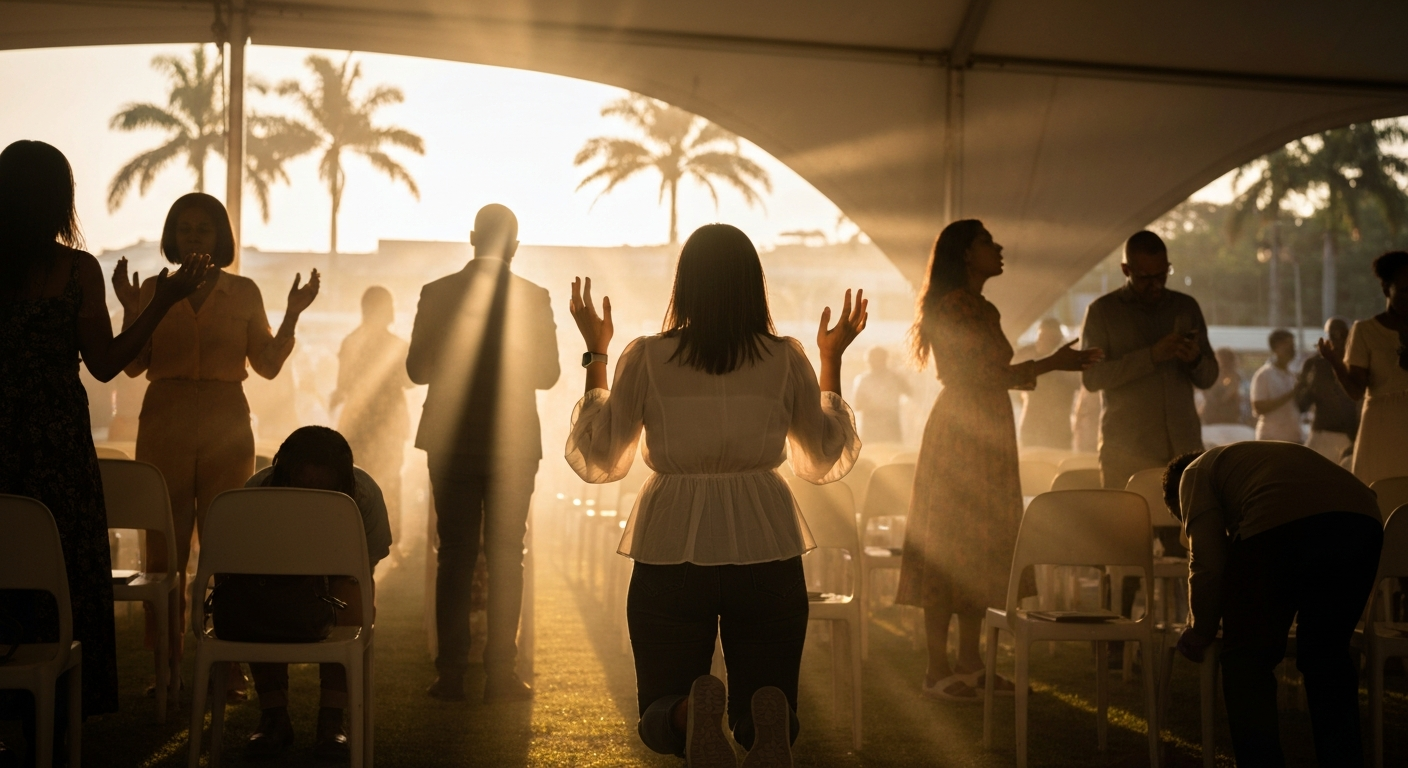 Durban, KwaZulu-Natal
 Miracle of Healing in South Africa
During a 2025 South Africa crusade, Precious was miraculously healed from diabetes through prayer, along with a woman healed from kidney infection.
Read the story Leipzig, Saxony
 Johann Sebastian Bach - Every Note for God's Glory
Johann Sebastian Bach dedicated his entire musical genius to God's glory, writing 'Soli Deo Gloria' on his compositions and serving as a church musician.
Read the story