Abram the Hebrew: Why 318 Men Went to War (Genesis 14)
Day twenty-three of a walk through the whole Bible to know the God who speaks, opened up. Genesis 14:1-16 in the Hebrew: Abram called the Hebrew (ibri), the man who crossed over and lives apart; the 318 trained (chanik) men born in his house; the draw out (ruq), pursue (radaph) and bring back (shuv) that shape the first rescue in Scripture; and the captives (shabah) carried off from Sodom. Why the man who held a promise could move while the man who chose by sight was taken, and how Abram going into the night for his brother foreshadows Christ, who came to proclaim liberty to the captives.
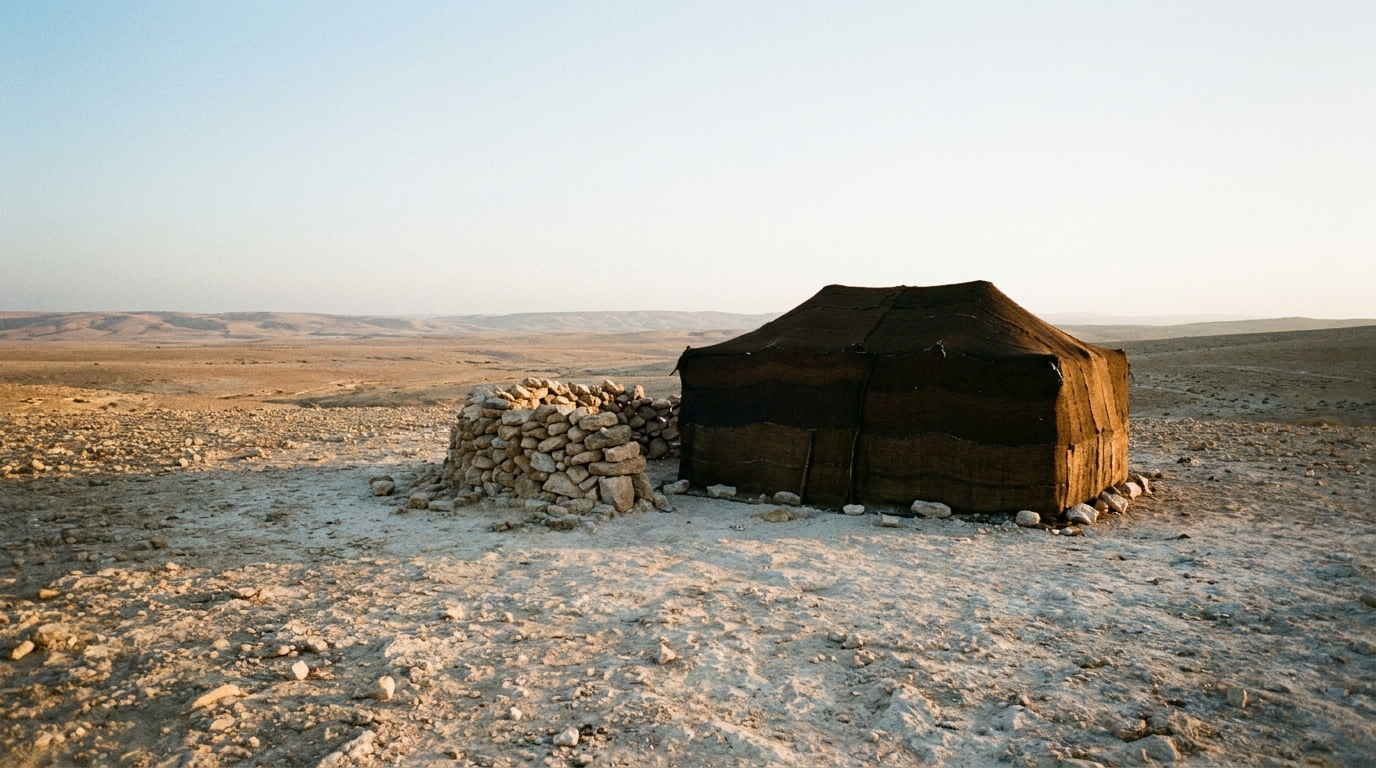
Genesis has been a book of families, tents and altars. All at once it becomes a book of armies.
What happens in Genesis 14, the first war in the Bible?
The chapter opens on a rebellion. Four kings from the east, led by Chedorlaomer king of Elam, have held five smaller kings of the Jordan plain as vassals for twelve years (Genesis 14:4). In the thirteenth year the five rebel; in the fourteenth, Chedorlaomer's coalition comes down and breaks them, defeating a string of peoples along the way and sacking Sodom and Gomorrah. "The four kings seized all the goods of Sodom and Gomorrah and all their food, and they went on their way" (Genesis 14:11). It is the first war the Bible records, and it reaches straight into Abram's family: "They also carried off Abram’s nephew Lot" (Genesis 14:12). Lot had chosen Sodom by sight one chapter earlier (Genesis 13:10-12), and now the very city he chose has carried him off with it.
Why is Abram called "the Hebrew" here?
"Then an escapee came and reported this to Abram the Hebrew" (Genesis 14:13). This is the first time the word appears in the Bible. Hebrew is ibri (H5680), from a root that carries the sense of crossing over or passing through. It marks Abram as the man from the other side, the one who came over the river and lives apart from the nations around him. The label lands in exactly the verse where Abram is about to act alone against an empire. He is the outsider with a promise, bound by treaty to three local brothers but belonging, in the end, to the God who called him across. To be a Hebrew here is to be the man who lives by a word from somewhere else.
Who were the 318 trained men?
When the news came, "he mobilized the 318 trained men born in his household" (Genesis 14:14). Trained is chanik (H2593), a word found nowhere else in the Hebrew Bible, meaning tried, tested, dedicated men. They were yalid (H3211), born in his house, raised under his roof over the long years of waiting. The verb for how Abram called them out is ruq (H7324), used elsewhere for emptying a vessel or drawing a sword from its sheath; he draws out his household like a blade. While Abram waited on a promise with no son of his own yet, he spent those years building a household deep enough to raise and train 318 fighting men. A life lived on God's word grows something real in the waiting.
How could Abram defeat the kings who crushed everyone else?
"During the night, Abram divided his forces and routed Chedorlaomer’s army, pursuing them as far as Hobah, north of Damascus" (Genesis 14:15). The verb radaph (H7291), to pursue, drives the scene: Abram chases a victorious army through the dark, far to the north. Then shuv (H7725), to bring back, turns it around: "He retrieved all the goods, as well as his relative Lot" (Genesis 14:16). The people who were shabah (H7617), carried off as captives, are carried home. Abram moves against absurd odds because he is not fighting for the land; God has already handed him the land (Genesis 13:15). He fights only for his brother. A man who already knows what God has promised him is free to spend himself on someone else. And the story names where the victory came from a few verses later, when Melchizedek blesses "God Most High, who has delivered your enemies into your hand" (Genesis 14:20).
How does Abram's rescue point to Jesus?
A man leaves his own settled place, goes into the night after people who cannot free themselves, defeats the power holding them, and brings them home with all they had lost. The New Testament lays that same shape over Christ, and names Abraham in the same breath. Jesus came, in flesh and death, to destroy the one "who holds the power of death, that is, the devil" (Hebrews 2:14), and to "free those who all their lives were held in slavery by their fear of death" (Hebrews 2:15). And then the writer is precise about who this rescue is for: "it is not the angels He helps, but the descendants of Abraham" (Hebrews 2:16). Abram went after Lot; Christ goes after Abraham's whole family, which by faith takes in us. Jesus opened His ministry by reading it aloud: "He has sent Me to proclaim liberty to the captives and recovery of sight to the blind, to release the oppressed" (Luke 4:18). The night raid in Genesis 14 is the first faint sketch of the rescue the whole Bible is moving toward.
What does Genesis 14 teach us about knowing the God who speaks?
It teaches that a word from God, held and trusted, changes what you are free to do. Lot walked by sight into Sodom, and it made him a prisoner. Abram walked by what God had said, owning nothing he could see, and it made him the one man free enough to ride to the rescue. The difference between them is which voice they were living by. And the God who speaks answers Abram's faith in kind. Straight after the battle, when Abram refuses to be enriched by the king of Sodom, God speaks again: "Do not be afraid, Abram. I am your shield, your very great reward" (Genesis 15:1). That is the whole point of the walk we are on. To know the God who speaks is to let His word decide how you live, so that you come to know Him as your shield and your reward, and are known by Him as the friend who took Him at His word. Write down what He has said to you. Then live as though it is true, even on the night the odds are impossible.
Continue this pillar
Trust
Encouragement for Hard Seasons: What the Bible Says
When life is hard, you need more than platitudes. Real encouragement from Scripture and real stories of people who found God faithful in their hardest seasons.
Why Gen Z Is Leaving Church (But Not Faith)
Gen Z isn't abandoning God. They're leaving institutions that don't feel real. What the data actually says, why it matters, and what comes next for faith.
Don't Waste the Wait: Speaking Strong When God Says Now
Waiting on God is not passive; it is prayerful, watchful, and ready. Preparing your heart in the silence so you can speak with courage when God says now.
Next in the practice
Hear & Recognise
Knowing God's voice the way a child knows their mother's.
Continue to Hear & RecogniseTry Doxa free
Three free interactions in your browser. No signup required to start.Free on iOS and Android.
Try Doxa Free

Or get the app for unlimited interactions and live voice.
Keep reading
Credited as Righteousness: How Abram Was Made Right (Genesis 15)
Day twenty-five of a walk through the whole Bible to know the God who speaks, opened up. Genesis 15:1-6 in the Hebrew: the shield (magen) and reward (sakar) God names Himself after the battle; the ancient Nuzi custom of adopting a servant as heir that lies behind Abram's worry; and the two words that carry the whole scene, aman, the root of 'amen', the firmness of a child leaning its full weight on arms it trusts, and chashab, the accountant's word for what God enters in the ledger when He counts Abram's trust as righteousness. Why this quiet night is where Scripture defines faith, and how Paul reads it straight through to Jesus.
Abram Believed God: The Night He Counted the Stars (Genesis 15)
Day twenty-five of a walk through the whole Bible to know the God who speaks. Abram is rich and childless, and God comes to him in the dark with a shield, a reward, and a sky full of stars he cannot count. Abram says his ache out loud, God answers with one child and a countless family, and Abram believes Him, the moment Scripture will call the first man credited as righteous for taking God at His word. Why believing what God says, when your life still argues the other way, is how anyone comes to know Him and be counted right with Him.
From the Grace Record
Real accounts of what God has done, drawn from 2,000 years of believers.
Polycarp of Smyrna
Polycarp of Smyrna, student of Apostle John, remained faithful to Christ for 86 years until his martyrdom in 155 AD, declaring he could never blaspheme.
The Women Who Lead Iran's Underground Church When the Men Were Taken to Prison
When Iranian authorities imprison male house church leaders, women step forward to lead, teach, and multiply the underground church, making them the backbone of the fastest-growing church movement in the world.
Johann Sebastian Bach - Every Note for God's Glory
Johann Sebastian Bach dedicated his entire musical genius to God's glory, writing 'Soli Deo Gloria' on his compositions and serving as a church musician.