Abram in Egypt: The Fear That Nearly Cost the Promise (Genesis 12)
Day twenty of a walk through the whole Bible to know the God who speaks. A famine hits the promised land, and Abram, who days ago was building altars, goes down to Egypt, tells Pharaoh that Sarai is only his sister, and trades his wife's safety for his own. Why the promise survives anyway, how this whole scene is the Exodus in miniature, and what it means to carry your fear back to the God who keeps His word even when your trust runs thin.
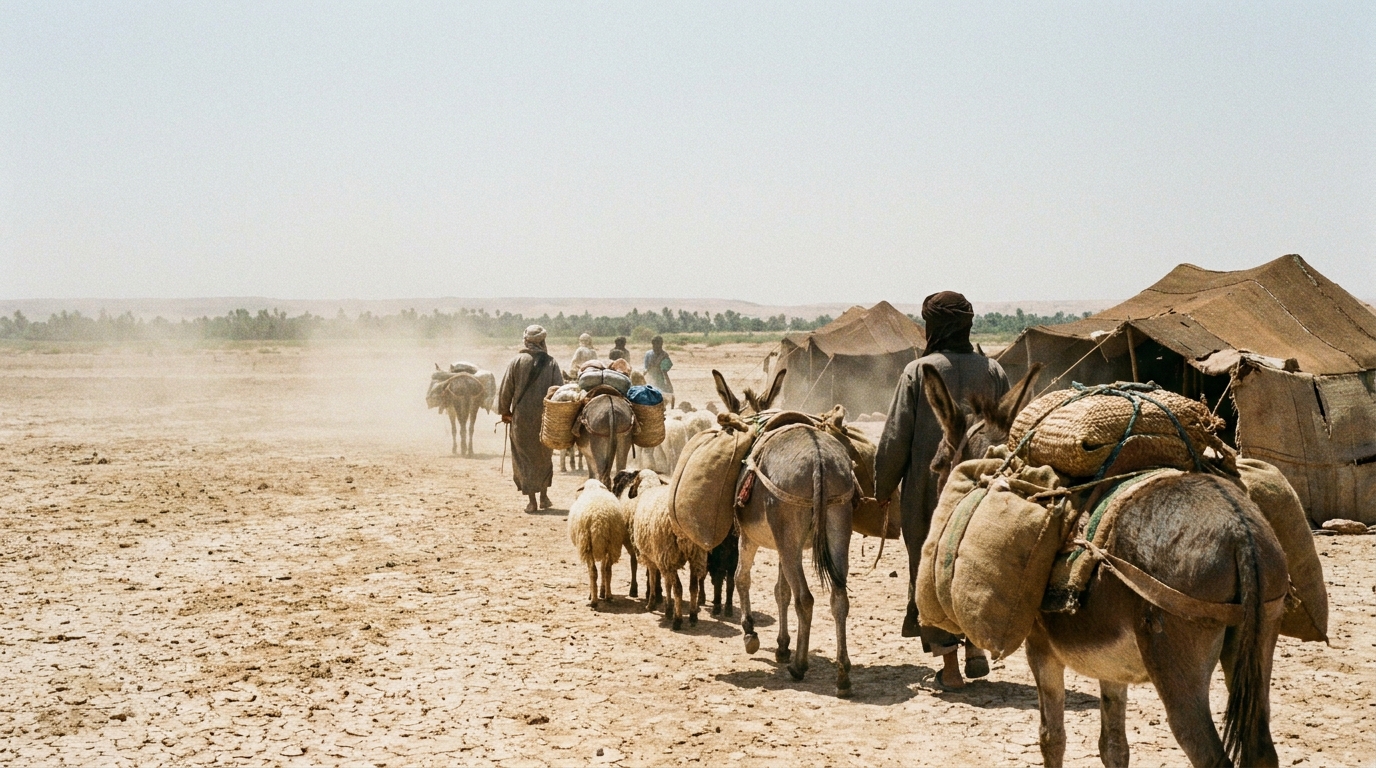
Then the famine came, and Abram went quiet.
One chapter ago he was building altars. At Shechem, then at Bethel, he had pinned God's promise to the ground and "called on the name of the LORD" (Genesis 12:8). Now the very land God sent him to dries up, and the man who had been walking on a word heads down to Egypt to wait out the famine (Genesis 12:10). Look at what is missing from the whole journey. No altar. No word from God. No calling on His name. The practice that carried him into the land is nowhere on the road out of it.
Fear moves into the silence. "I know that you are a beautiful woman," Abram tells Sarai at the border (Genesis 12:11), "and when the Egyptians see you, they will say, 'This is his wife.' Then they will kill me but will let you live" (Genesis 12:12). So he asks her to cover for him: "Please say you are my sister" (Genesis 12:13). The man God had promised to make into a great nation is now trading his wife's safety for his own skin. And the scheme pays, for a while. Pharaoh's officials take Sarai into the palace, and Abram is handed sheep, cattle, donkeys and servants on her account (Genesis 12:15-16).
Where is God while His promise sits in Pharaoh's house?
Right where Abram left Him, still keeping the word Abram had stopped trusting. "The LORD, however, afflicted Pharaoh and his household with severe plagues because of Abram's wife Sarai" (Genesis 12:17). Abram prayed nothing on the way down and asked nothing. The promise still ran through Sarai, so God guarded Sarai while the man who should have was busy saving himself. A pagan king ends up rebuking the father of the faith. "What have you done to me?" Pharaoh demands (Genesis 12:18), before sending him off with "Now then, here is your wife. Take her and go!" (Genesis 12:19).
Why does this scene feel like a story you already know?
Because it is the Exodus in miniature, centuries early. A famine drives God's people down into Egypt. A Pharaoh takes what is not his. The LORD strikes Egypt with plagues. God's people walk out unharmed and loaded with wealth (Genesis 12:20). God is already rehearsing how He rescues, and He will run the same rescue again for a whole nation, and again when He calls His own Son up out of Egypt (Matthew 2:15). The promise that all the families of the earth would be blessed survives Egypt because God guards it. Abram nearly lost it; God kept it whole.
What this means when the pressure lands on you
Here is the lift. When the famine comes, something in you wants to go quiet before God and let the fear get loud, to stop carrying the pressure back to what He said and start managing it alone. Abram shows you the cost of that, and God shows you the mercy underneath it. So do the one thing Abram skipped: take the fear back to the word. Read again what God actually told you, out loud if you need to, and weigh the threat against the promise instead of against your nerves. This is how you come to know the God who speaks and be known by Him. You carry His word back to Him, especially on the days you failed to trust it, because the God who kept His promise to a man who lied his way through Egypt keeps His promise to you when your own trust runs thin. What has God said to you that fear is trying to talk you out of? Say it back to Him today.
Deeper study today in the Doxa Deeper Dive, on the famine that sent Abram down, the Exodus already taking shape here, and why God struck Pharaoh to guard a promise Abram would not. Read it here.
Continue this pillar
Trust
Encouragement for Hard Seasons: What the Bible Says
When life is hard, you need more than platitudes. Real encouragement from Scripture and real stories of people who found God faithful in their hardest seasons.
Why Gen Z Is Leaving Church (But Not Faith)
Gen Z isn't abandoning God. They're leaving institutions that don't feel real. What the data actually says, why it matters, and what comes next for faith.
Don't Waste the Wait: Speaking Strong When God Says Now
Waiting on God is not passive; it is prayerful, watchful, and ready. Preparing your heart in the silence so you can speak with courage when God says now.
Next in the practice
Hear & Recognise
Knowing God's voice the way a child knows their mother's.
Continue to Hear & RecogniseTry Doxa free
Three free interactions in your browser. No signup required to start.Free on iOS and Android.
Try Doxa Free

Or get the app for unlimited interactions and live voice.
Keep reading
Credited as Righteousness: How Abram Was Made Right (Genesis 15)
Day twenty-five of a walk through the whole Bible to know the God who speaks, opened up. Genesis 15:1-6 in the Hebrew: the shield (magen) and reward (sakar) God names Himself after the battle; the ancient Nuzi custom of adopting a servant as heir that lies behind Abram's worry; and the two words that carry the whole scene, aman, the root of 'amen', the firmness of a child leaning its full weight on arms it trusts, and chashab, the accountant's word for what God enters in the ledger when He counts Abram's trust as righteousness. Why this quiet night is where Scripture defines faith, and how Paul reads it straight through to Jesus.
Abram Believed God: The Night He Counted the Stars (Genesis 15)
Day twenty-five of a walk through the whole Bible to know the God who speaks. Abram is rich and childless, and God comes to him in the dark with a shield, a reward, and a sky full of stars he cannot count. Abram says his ache out loud, God answers with one child and a countless family, and Abram believes Him, the moment Scripture will call the first man credited as righteous for taking God at His word. Why believing what God says, when your life still argues the other way, is how anyone comes to know Him and be counted right with Him.
From the Grace Record
Real accounts of what God has done, drawn from 2,000 years of believers.
Miracle of Healing in South Africa
During a 2025 South Africa crusade, Precious was miraculously healed from diabetes through prayer, along with a woman healed from kidney infection.
Polycarp of Smyrna
Polycarp of Smyrna, student of Apostle John, remained faithful to Christ for 86 years until his martyrdom in 155 AD, declaring he could never blaspheme.
The Women Who Lead Iran's Underground Church When the Men Were Taken to Prison
When Iranian authorities imprison male house church leaders, women step forward to lead, teach, and multiply the underground church, making them the backbone of the fastest-growing church movement in the world.