Abram and Lot Part Ways: Why He Gave Lot the Best Land (Genesis 13)
Day twenty-one of a walk through the whole Bible to know the God who speaks. Abram comes up out of Egypt and heads straight back to the altar he had left, and when a quarrel breaks out over grazing land he hands his nephew Lot first pick of it. Why the man holding God's promise could afford to let go of the best land, why Lot's choice by sight ran his tent toward Sodom, and how a squabble between herdsmen became a picture of the meek inheriting the earth.
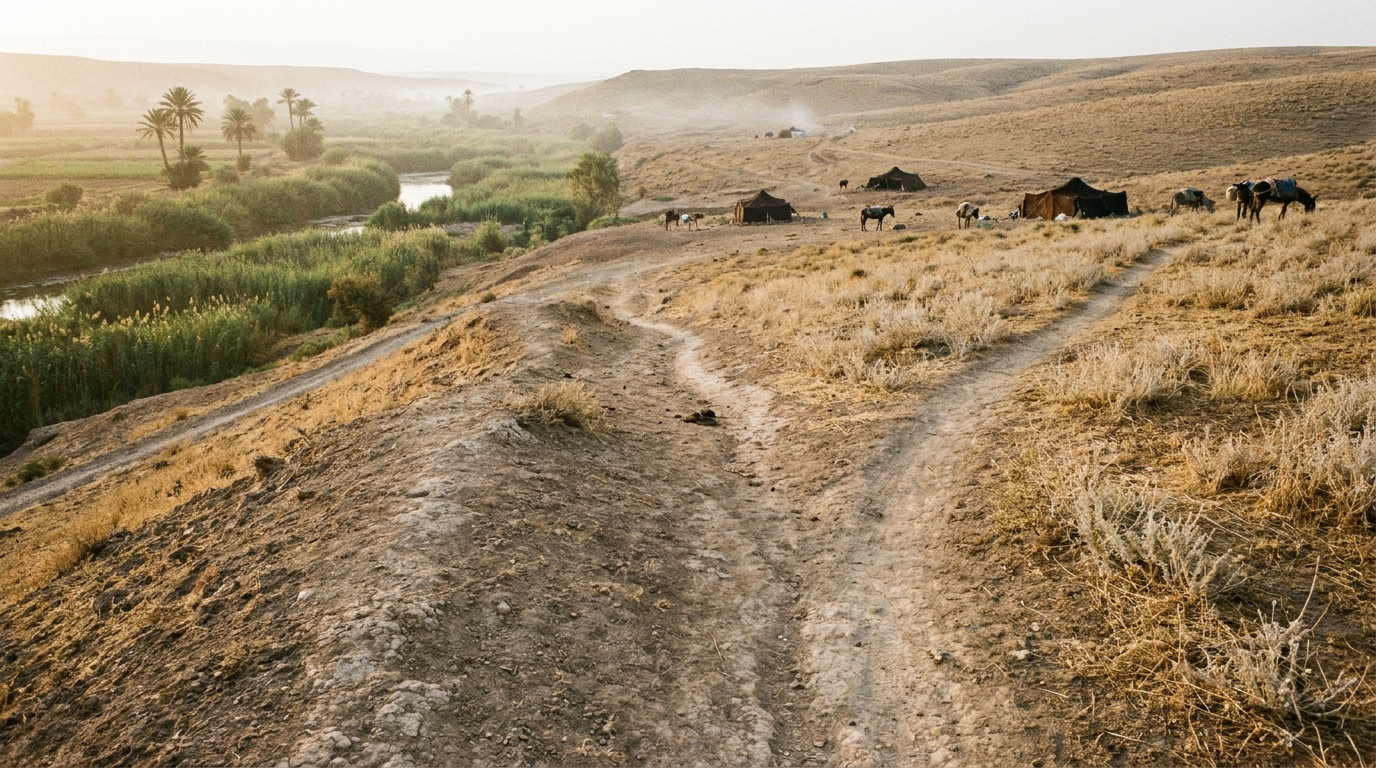
Abram came up out of Egypt richer than he went in, and the first thing he did was go looking for an altar.
He retraced his own steps north through the Negev, back toward Bethel, "to the site where he had built the altar. And there Abram called on the name of the LORD" (Genesis 13:4). The man who went silent under pressure in Egypt, who prayed nothing and schemed everything to save his own skin, comes home and picks the practice back up where he dropped it. He remembers who he is by returning to the place he last heard from God.
Then the trouble comes, the kind prosperity breeds. Abram and his nephew Lot are both wealthy now, and "the land was unable to support both of them" (Genesis 13:6). Their herdsmen start fighting over grazing and water (Genesis 13:7). Abram is the elder, and he is the one God made the promise to. He has every right to pull rank and keep the best of the land for himself.
Watch what he does instead. "Please let there be no contention between you and me, or between your herdsmen and my herdsmen. After all, we are kinsmen" (Genesis 13:8), he says, and then he hands over the choice: "If you go to the left, I will go to the right; if you go to the right, I will go to the left" (Genesis 13:9). He gives the younger man first pick of the very land God had promised him. He can afford to, because his portion was never going to be settled by a squabble over grazing rights. God had already spoken it over him. A man holding a promise from God does not have to grab.
Lot decides the other way, by his eyes. He "looked out and saw that the whole plain of the Jordan, all the way to Zoar, was well watered like the garden of the LORD, like the land of Egypt" (Genesis 13:10). He takes the lush valley, sets out east, and "pitched his tent toward Sodom" (Genesis 13:12). Then the story drops one cold line right after: "But the men of Sodom were wicked, sinning greatly against the LORD" (Genesis 13:13). The best-watered ground in the whole chapter runs straight toward the worst place in it. That is the risk of choosing by sight with no word from God in your hand.
Centuries later Jesus put Abram's posture into a single line: "Blessed are the meek, for they will inherit the earth" (Matthew 5:5). Abram let go of the land and was given all of it; Lot seized the best of it and lost everything he had pitched his tent toward. The one who opens his hands because he trusts the God who speaks ends up holding more than the one who grasps.
Here is the lift. Somewhere you are being pushed to fight for your portion, to make sure you get the well-watered patch before anyone else does. Go back to the altar first. Read again what God has actually promised you, and let that word decide how tightly you hold. When you know your inheritance rests on His voice, you can be the one who yields, who lets the other person choose first, who keeps the peace. That is how you come to know the God who speaks and be known by Him. You trust His word enough to loosen your hands. What are you gripping today that God has already promised to give you?
Deeper study today in the Doxa Deeper Dive, on why Abram went back to the altar before anything else, the Hebrew behind Lot lifting his eyes, and how a quarrel between herdsmen became a picture of the meek inheriting the earth. Read it here.
Continue this pillar
Trust
Encouragement for Hard Seasons: What the Bible Says
When life is hard, you need more than platitudes. Real encouragement from Scripture and real stories of people who found God faithful in their hardest seasons.
Why Gen Z Is Leaving Church (But Not Faith)
Gen Z isn't abandoning God. They're leaving institutions that don't feel real. What the data actually says, why it matters, and what comes next for faith.
Don't Waste the Wait: Speaking Strong When God Says Now
Waiting on God is not passive; it is prayerful, watchful, and ready. Preparing your heart in the silence so you can speak with courage when God says now.
Next in the practice
Hear & Recognise
Knowing God's voice the way a child knows their mother's.
Continue to Hear & RecogniseTry Doxa free
Three free interactions in your browser. No signup required to start.Free on iOS and Android.
Try Doxa Free

Or get the app for unlimited interactions and live voice.
Keep reading
Credited as Righteousness: How Abram Was Made Right (Genesis 15)
Day twenty-five of a walk through the whole Bible to know the God who speaks, opened up. Genesis 15:1-6 in the Hebrew: the shield (magen) and reward (sakar) God names Himself after the battle; the ancient Nuzi custom of adopting a servant as heir that lies behind Abram's worry; and the two words that carry the whole scene, aman, the root of 'amen', the firmness of a child leaning its full weight on arms it trusts, and chashab, the accountant's word for what God enters in the ledger when He counts Abram's trust as righteousness. Why this quiet night is where Scripture defines faith, and how Paul reads it straight through to Jesus.
Abram Believed God: The Night He Counted the Stars (Genesis 15)
Day twenty-five of a walk through the whole Bible to know the God who speaks. Abram is rich and childless, and God comes to him in the dark with a shield, a reward, and a sky full of stars he cannot count. Abram says his ache out loud, God answers with one child and a countless family, and Abram believes Him, the moment Scripture will call the first man credited as righteous for taking God at His word. Why believing what God says, when your life still argues the other way, is how anyone comes to know Him and be counted right with Him.
From the Grace Record
Real accounts of what God has done, drawn from 2,000 years of believers.
Johann Sebastian Bach - Every Note for God's Glory
Johann Sebastian Bach dedicated his entire musical genius to God's glory, writing 'Soli Deo Gloria' on his compositions and serving as a church musician.
Inside Iran's Underground Church
Iran's underground church is one of the fastest-growing in the world, the Holy Spirit is reaching Muslims through dreams, healings, and secret house churches despite severe persecution.
When the Check Came - George Müller's Orphanages
George Müller cared for over 10,000 orphans in Bristol, England without ever asking anyone for money, trusting only God's provision through prayer.