Genesis 23: The Only Land Abraham Ever Owned Was a Grave
Day forty-two of a walk through the whole Bible to know the God who speaks. Sarah dies at Hebron, and Abraham buys a cave at Machpelah, the only ground in Canaan he would ever own. Genesis 23.

Sarah died at Kiriath-arba, the town later called Hebron, at 127 years old. "Abraham went out to mourn and to weep for her" (Genesis 23:2).
Then he got up from beside her body and went to ask the Hittites for a grave.
What happens in Genesis 23?
He opened with the plain truth about himself: "I am a foreigner and an outsider among you" (Genesis 23:4). More than sixty years earlier God had appeared to him in this land and said, "I will give this land to your offspring" (Genesis 12:7). Later the promise widened to "all the land of Canaan, as an eternal possession" (Genesis 17:8). After all those years on that promise, Abraham owned none of it, and had to ask the neighbours for somewhere to bury his wife.
The Hittites offered him the finest of their tombs. Ephron, who owned the cave at Machpelah, offered him the whole field as a gift, in front of the town. Abraham bowed to them twice and kept asking to pay. Ephron named a price, four hundred shekels of silver, and Abraham weighed it out "in the hearing of the Hittites" (Genesis 23:16). The field, the cave and every tree inside its boundaries passed to him "in the presence of all the Hittites who had come to the gate of his city" (Genesis 23:18).
Why did Abraham insist on paying?
God says nothing in this chapter. No vision, no voice, no angel at the gate. Abraham acts on words God had spoken decades before, and he acts in public. A gift leaves the giver's family with a claim on the ground. A sale weighed out before witnesses at the city gate is a record that stands. Abraham wanted the first piece of the promised land on the record, legally his, in the country God had said would belong to his children.
This is what holding a promise looks like in a week of grief. Of all the land of Canaan, Abraham would hold one field and one cave in his lifetime, and he buried Sarah there as a man who expected the rest to follow.
How does Genesis 23 point to Jesus?
Stephen, on trial in Jerusalem, said God gave Abraham "no inheritance here, not even a foot of ground" (Acts 7:5). Hebrews says Abraham and his family "died in faith, without having received the things they were promised" (Hebrews 11:13). The cave at Machpelah filled with people who died holding that promise: Sarah, then Abraham, Isaac, Rebekah, Leah and Jacob.
Jesus answered a question about the resurrection with God's words from the burning bush, "I am the God of Abraham, the God of Isaac, and the God of Jacob" (Matthew 22:32). The men in that cave still had a living God. Then Jesus Himself was laid in a tomb cut into rock outside Jerusalem, and on the third morning an angel told the women, "Come, see the place where He lay" (Matthew 28:6). Christ is "the firstfruits of those who have fallen asleep" (1 Corinthians 15:20). Everyone buried at Machpelah was buried waiting for Him.
What do you do with a promise you have not seen yet?
Abraham knew God well enough to pay full price for a grave in the land God had promised him. That is how God made Himself known to Abraham: He spoke, and Abraham trusted Him for the rest of his life on the strength of it.
If God has promised you something and you are still waiting, put it on the record. Write the words and the date in the Doxa app, the way Abraham's purchase was witnessed at the gate. Then write down the small part you already hold, your one field. On a day when the grief is heavy and you hear nothing from heaven, you will have both in front of you.
What has God promised you that you are still holding without seeing it?
Deeper study today in the Doxa Deeper Dive: the two words Abraham used for himself at the gate, and who prayed them to God after him. Read it here.
Download Doxa, the app for recording, weighing and remembering prophetic encouragement.


Continue this pillar
Trust


Next in the practice
Hear & Recognise
Knowing God's voice the way a child knows their mother's.
Try Doxa free
Three free interactions in your browser. No signup required to start.Free on iOS and Android.
Try Doxa FreeOr get the app for unlimited interactions and live voice.
Keep reading

Cave of Machpelah: Why Abraham Paid 400 Shekels for a Tomb
Day forty-two of a walk through the whole Bible to know the God who speaks, through the Hebrew and Greek of Genesis 23. The two words Abraham used for himself, the full price he insisted on, and what the cave meant to Israel.

Moses Prayed This Verse to Save Israel: God's Oath in Genesis 22
Day forty-one of a walk through the whole Bible to know the God who speaks, through the Hebrew and Greek of Genesis 22:15–24. The oath God swore by Himself, the well named for an oath, and the prayer at Sinai that held God to His word.
From the Grace Record
Real accounts of what God has done, drawn from 2,000 years of believers.
 Bristol, City of Bristol
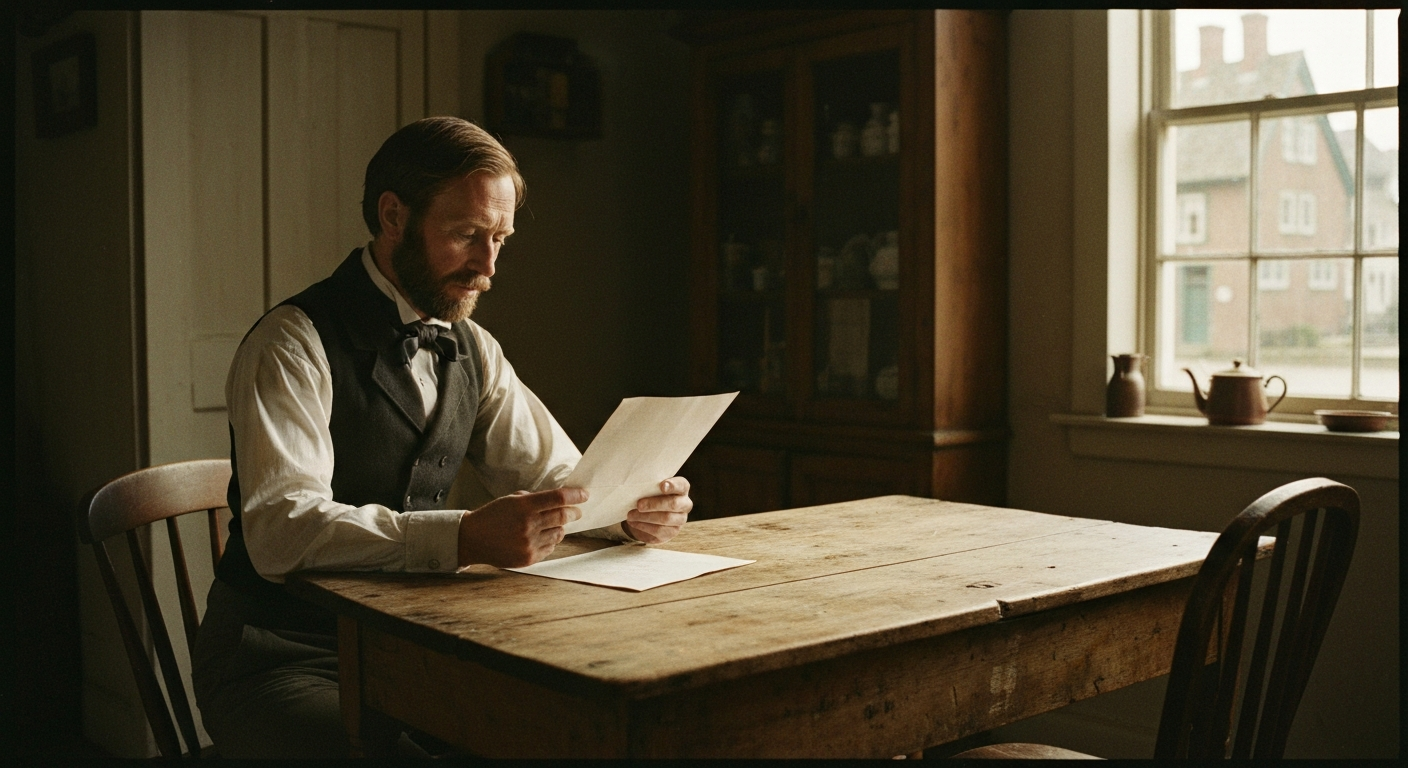
 When the Check Came - George Müller's Orphanages
George Müller cared for over 10,000 orphans in Bristol, England without ever asking anyone for money, trusting only God's provision through prayer.
Read the story Iran
Iran Inside Iran's Underground Church
Iran's underground church is one of the fastest-growing in the world, the Holy Spirit is reaching Muslims through dreams, healings, and secret house churches despite severe persecution.
Read the story Samaria / Rome
 Justin Martyr: Philosopher Found True Wisdom
A Greek philosopher in 2nd century Rome searched through Stoicism, Platonism, and other philosophies before encountering Christianity.
Read the story