Sarai's Shortcut to a Son: The House Only God Builds (Genesis 16)
Day twenty-seven of a walk through the whole Bible to know the God who speaks, opened up. Genesis 16:1-6 in the original words: the verb Sarai chose for 'build a family' (banah) and the son-and-house pun hiding under it, the surrogate custom Abram's neighbours took for granted, and why 'Abram listened to the voice of Sarai' is the same Hebrew phrase God used to indict Adam in the garden. How one reasonable, everyone-does-it plan stepped outside the promise, and what it teaches about waiting on the God who speaks and keeps His word to the very last.
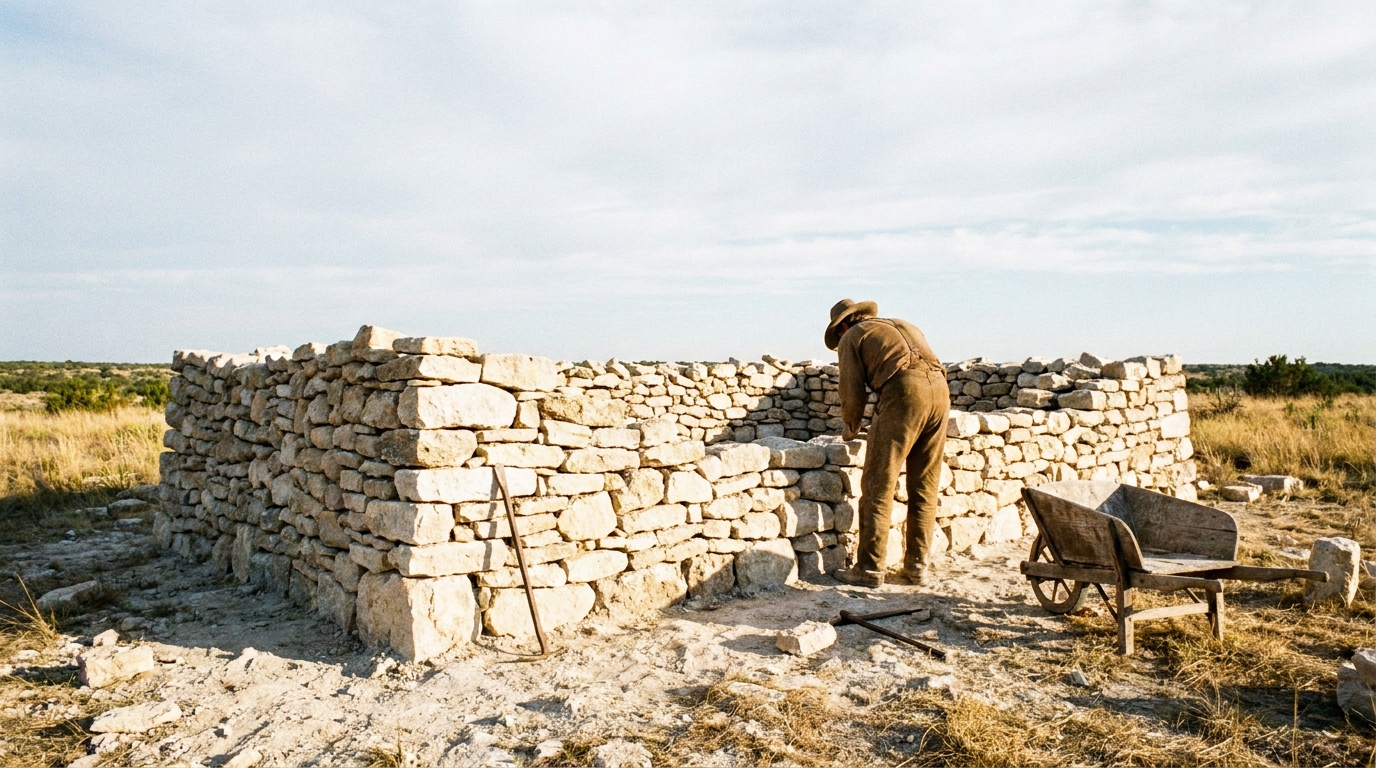
Genesis 16 opens with a decade of silence and a reasonable plan to end it. God had promised Abram a son from his own body (Genesis 15:4). Ten years on, Sarai is still barren, and she does what a woman of her world might have done. The scene is short, but almost every line sits on a Hebrew word that carries more than the English lets through.
What did Sarai mean by "build a family"?
Sarai's plan in the BSB reads, "perhaps I can build a family by her" (Genesis 16:2). The verb underneath is banah (H1129), the ordinary word for building a house, a wall, a city. Hebrew hears a pun in it that English cannot. The word for son is ben (H1121), and to build, banah, sounds like the making of sons. To be given a child, in this idiom, is to be built up. Sarai is saying, quite literally, that she hopes to be built through Hagar.
That one verb reaches across the whole Old Testament. Centuries later a psalm picks up the same word and turns it into a warning: "Unless the LORD builds the house, its builders labor in vain" (Psalms 127:1). Two lines on it names what that house is: "Children are indeed a heritage from the LORD, and the fruit of the womb is His reward" (Psalms 127:3). The psalm is about exactly Sarai's situation, and it says the building of a family is God's work, not a project we manage. Sarai chose the right word and aimed it at the wrong builder. She set out to build with her own hands the one house Scripture says only the LORD can raise.
Was giving her servant to Abram normal in that world?
To a modern reader the plan looks like an act of desperation. To Abram's neighbours it was the sanctioned legal remedy for a barren marriage. Law codes and family archives from the ancient Near East, the Code of Hammurabi and the Nuzi tablets among them, describe the same arrangement: a childless wife could give her slave-girl to her husband, and the child born would be reckoned the wife's own. Hagar is called Sarai's shiphchah (H8198), a female slave attached to her mistress, precisely the servant such a custom used. Genesis even notes the ten years in Canaan (Genesis 16:3), the decent interval before a wife was expected to try this route.
This is the quiet warning in the passage. Sarai's plan was the culturally correct thing, the move everyone around her would have nodded at. And it still stepped outside the promise. God had not told them how the son would come; He had only said that he would. The reasonable, everyone-does-it solution was still unbelief, only in respectable clothes.
Why does "Abram listened to the voice of Sarai" echo the Fall?
The hinge of the passage is a single Hebrew phrase. "Abram listened to the voice of Sarai" (Genesis 16:2) is shama (H8085), to hear and to heed, joined to qol (H6963), voice. Shama b'qol, to listen to the voice of, is the covenant phrase for obeying God: hear the voice of the LORD your God. It is what Abram did in chapter twelve when he heard and went.
There is one earlier place in Genesis where a man listens to the voice of his wife against a word from God. In the garden, God says to Adam, "Because you have listened to the voice of your wife and have eaten from the tree" (Genesis 3:17), the same verb and the same construction. Genesis is telling us, in its grammar, that Abram is standing where Adam stood: a real word from God on one side, a trusted human voice on the other, and a choice about which to obey. This is the practice failing in real time. Abram had heard God and held the promise for years. Now he hears another voice, sets the promise down, and acts.
Where is Christ in Hagar and Sarai?
Paul takes this whole episode and reads it as a picture (Galatians 4:22-24). Two sons: Ishmael, "born according to the flesh" (Galatians 4:23), and Isaac, "born through the promise" (Galatians 4:23). Ishmael is what the flesh produces when it tries to secure God's promise on its own timetable. Isaac is what God produces when His people wait for Him to speak the son into being, which He does in chapter twenty-one, in His own time. The line that runs to Christ runs through the son Abram and Sarai could not manufacture and could only receive.
So Genesis 16 teaches the practice by showing it break. To know the God who speaks is to keep His actual word when the waiting outlasts your patience, rather than trading it for a reasonable plan that gets there sooner. Abram had the promise in hand. The whole grief of this chapter grows from a decade of silence, a good voice, and a man who stopped waiting on the God who had already told him the truth. Write down what God has said. Hold it past the ten-year mark. The house you are straining to build may be the one only He can raise.

Continue this pillar
Trust



Next in the practice
Hear & Recognise
Knowing God's voice the way a child knows their mother's.
Try Doxa free
Three free interactions in your browser. No signup required to start.Free on iOS and Android.
Try Doxa Free

Or get the app for unlimited interactions and live voice.
Keep reading
 Hear & Recognise
 Abraham Obeyed on That Very Day: Genesis 17 and the Exodus Night
Day thirty of a walk through the whole Bible to know the God who speaks, opened up. Genesis 17:15-27 in the original words: where the Hebrew verb behind Abraham's laugh runs next in Genesis, the verb hidden inside God's answer about Ishmael, what the law of the day said about a slave woman's son, and why 'on that very day' was the phrase Israel used for the night they left Egypt. How the book's first hearers heard their own exodus in their father's obedience.
 Hear & Recognise
 Why Did Abraham Laugh? God Names Isaac a Year Early (Genesis 17)
Day thirty of a walk through the whole Bible to know the God who speaks. Abraham falls facedown and laughs at the promise of a son at a hundred, then pleads for Ishmael, the son he can already see. God hears both, names the child Isaac, which means he laughs, and sets the date a year out. Genesis 17:15-27: why Sarai becomes Sarah, what 'I have heard you' does with Ishmael's name, and why Abraham obeyed on that very day.
From the Grace Record
Real accounts of what God has done, drawn from 2,000 years of believers.
 Bristol, City of Bristol
 When the Check Came - George Müller's Orphanages
George Müller cared for over 10,000 orphans in Bristol, England without ever asking anyone for money, trusting only God's provision through prayer.
Read the story Iran
Iran The Women Who Lead Iran's Underground Church When the Men Were Taken to Prison
When Iranian authorities imprison male house church leaders, women step forward to lead, teach, and multiply the underground church, making them the backbone of the fastest-growing church movement in the world.
Read the story Samaria / Rome
 Justin Martyr: Philosopher Found True Wisdom
A Greek philosopher in 2nd century Rome searched through Stoicism, Platonism, and other philosophies before encountering Christianity.
Read the story